Textiles and Dress
Italian fashion
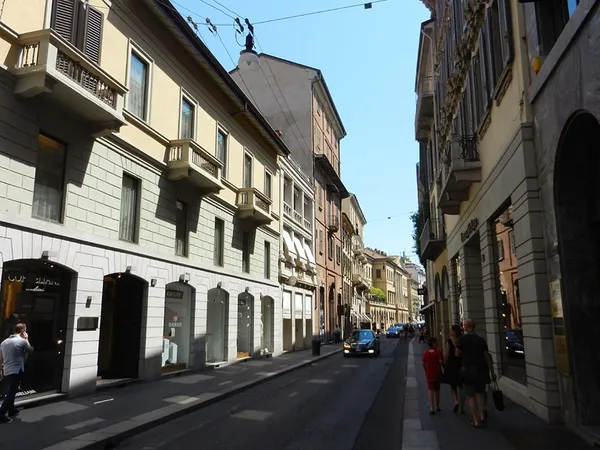
Italy is one of the leading countries in fashion design, alongside France and the United Kingdom. Fashion has always been an important part of the country's cultural life and society, and Italians are well known for their attention to dress. The concept of la bella figura, or good appearance, retains its traditional importance in Italian society. As such, Italian fashion brands are associated with the core values of Italianness or italianità, which consumers have embraced globally. Italian fashion became prominent during the 11th to 16th centuries, when artistic development in Italy was at its peak. Cities such as Rome, Palermo, Venice, Milan, Naples, Florence, and Vicenza started to produce luxury goods, hats, cosmetics, jewelry, and rich fabrics. From the 17th century to the early 20th century, Italian fashion lost its importance and lustre, and Europe's main trendsetter became France, with the great popularity of French fashion; this is due to the luxury dresses designed for the courtiers of Louis XIV. Since the 1951–1953 period, fashion soirées held by Giovanni Battista Giorgini in Florence, the "Italian school" started to compete with the French haute couture, and labels such as Prada and Gucci began to contend with Chanel and Dior. In 2009, according to the Global Language Monitor, Milan, Italy's centre of design, was ranked the top fashion capital of the world, and Rome was ranked fourth. Although both cities fell in subsequent rankings, Florence entered as the 31st world fashion capital in 2011. Milan is generally considered to be one of the "big four" global fashion capitals, along with New York, Paris, and London; occasionally, the "big five" also includes Rome. Italian fashion is linked to the most generalized concept of "Made in Italy", a merchandise brand expressing excellence of creativity and craftsmanship.
Also on this shelf
Hmong Americans.
God the Father in Western art.
See also
Uncatalogued shelfText from Wikipedia; plate via Wikimedia Commons. Text CC BY-SA 4.0; plate freely licensed (see Commons). Source record. Images and catalogue data are reproduced from open-access collections.