Textiles and Dress
Achaemenid conquest of the Indus Valley
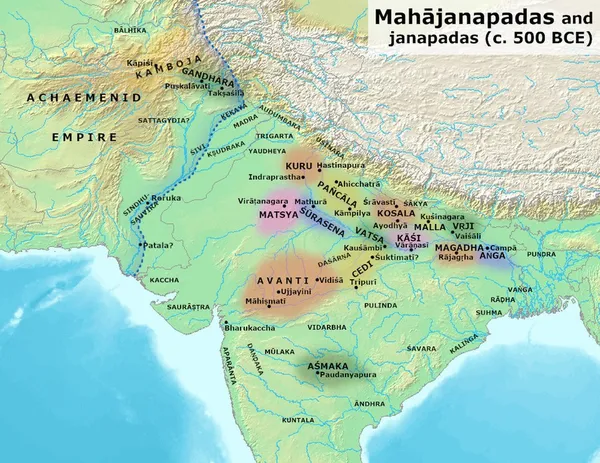
Around 535 BCE, the Persian king Cyrus the Great initiated a protracted campaign to absorb parts of northwestern South Asia into his nascent Achaemenid Empire. In this initial incursion, the Persian army annexed a large region to the west of the Indus River, consolidating the early eastern borders of their new realm. With a brief pause after Cyrus' death around 530 BCE, the campaign continued under Darius the Great, who began to re-conquer former provinces and further expand the Achaemenid Empire's political boundaries. Around 518 BCE, the Persian army pushed further into India to initiate a second period of conquest by annexing regions up to the Jhelum River in present-day Punjab. At their peak, the Achaemenids incorporated and ruled much of modern-day Pakistan into their territory. The first secure epigraphic evidence through the Behistun Inscription gives a date before or around 518 BCE. Persian penetration into the Indian subcontinent occurred in multiple stages, beginning from the northern parts of the Indus River and moving southward. As mentioned in several Achaemenid-era inscriptions, the Indus Valley was formally incorporated into the Persian realm through provincial divisions: Gandāra, Hindush, and Sattagydia. Persian rule over the Indus Valley waned over succeeding centuries and formally ended with the Greek conquest of Persia, led by Alexander the Great, giving rise to independent kingdoms such as those of Abisares, Porus, and Taxiles, as well as a number of gaṇasaṅghas, which would later confront the Macedonian army as it massed into the region for Alexander's Indian campaign. The Achaemenid Empire set a precedence of governance through the use of satrapies, which was further implemented by the Macedonian Empire, the Indo-Scythians, and the Kushan Empire.
Also on this shelf
Dressmaker.
Baju Kurung.
See also
Uncatalogued shelfText from Wikipedia; plate via Wikimedia Commons. Text CC BY-SA 4.0; plate freely licensed (see Commons). Source record. Images and catalogue data are reproduced from open-access collections.