Textiles and Dress
Cultural depictions of Charles V, Holy Roman Emperor
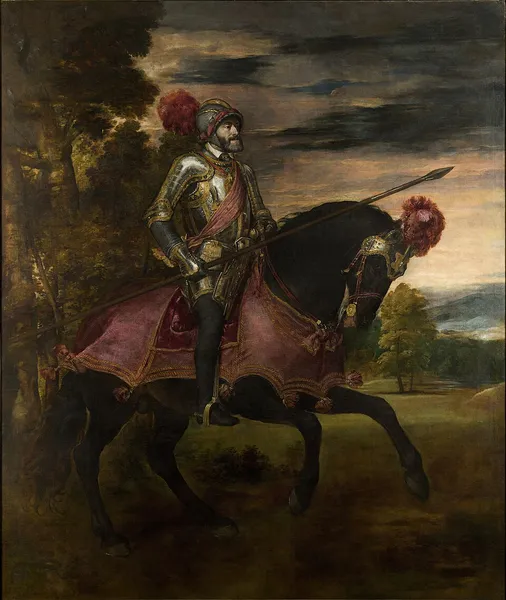
Charles V, Holy Roman Emperor (1500–1558), has traditionally attracted considerable scholarly attention and raised controversy among historians regarding his character, his rule and achievements (or failures) in the countries in his personal empire, as well as various social movements and wider problems associated with his reign. Historically seen as a great ruler by some or a tragic failure of a politician by others, he is generally seen by modern historians as both a capable politician and a brave and effective military leader, although his political vision and financial management tend to be questioned. Some criticize his inability to create or apply a consistent vision, while others defend him on the basis of the unprecedented nature of the task. Commenting on the events that commemorated the 500th anniversary (in 2000) of his birth, historian C. Scott Dixon writes: Born in Ghent on 24 February 1500, the first son of Philip of Habsburg and Juana of Castile, Charles would live to acquire the largest empire of the age. No other sovereign in Europe reigned over so many people or ruled over so many lands. By the year 1525, Charles V could lay claim to 72 separate titles, among them 27 kingdoms. 13 duchies, 22 counties and nine seigniories. He cast a shadow long enough to raise the concerns of the papal theologians, for here was a secular ruler who really could give living form to the medieval idea of a universal monarchy. It is no exaggeration to say that the political destiny of Europe in the sixteenth century was often in the hands of this Habsburg emperor, and it is thus little wonder that the anniversary of his birth has been commemorated in a series of public exhibitions, festivals, concerts, displays of art, learned conferences, and numerous publications.
Also on this shelf
Field of the Cloth of Gold.
High School of Fashion Industries.
See also
Uncatalogued shelfText from Wikipedia; plate via Wikimedia Commons. Text CC BY-SA 4.0; plate freely licensed (see Commons). Source record. Images and catalogue data are reproduced from open-access collections.