Textiles and Dress
Dhaka muslin
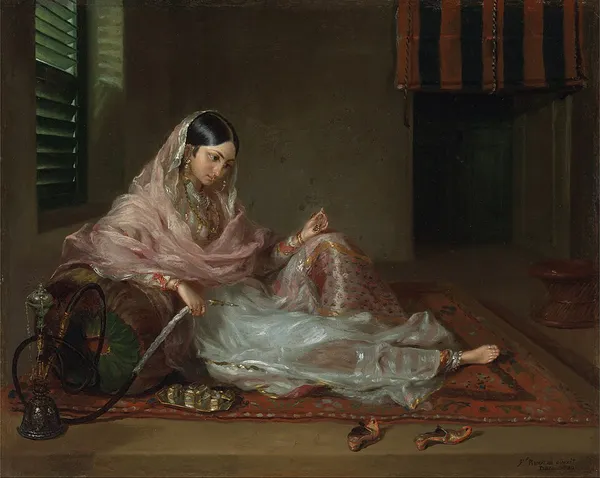
Dhaka muslin (Dhakai malmal) was an extraordinarily fine handwoven cotton textile produced in Dhaka (the modern-day capital city of Bangladesh), from at least the early medieval period through the 18th century. Renowned as “woven air,” it was prized by Mughal emperors and European nobility alike for its extreme lightness and transparency. Its ultra-fine yarns (often ~300-count cotton spun from the endemic phuti karpas plant) yielded thread counts of 800–1,200 warp threads per inch, far exceeding typical muslins (40–80). Travelers across centuries marveled that a whole muslin sheet could be pulled through a ring. During the Mughal era (16th–18th centuries) Bengal – especially Dhaka and Sonargaon – became the global hub of muslin production. The fabric underpinned a vast trade to India’s courts and Europe. Under British colonial rule, however, the industry was systematically crushed: machine-made imitations and punitive tariffs flooded markets, rural weavers fled or starved, and the special cotton variety was lost. Efforts since the late 20th century by scholars and artisans (and recent GI and UNESCO designations) seek to revive the craft.
Also on this shelf
Farmers and Merchants Bank of Los Angeles.
Coimbatore district.
See also
Uncatalogued shelfText from Wikipedia; plate via Wikimedia Commons. Text CC BY-SA 4.0; plate freely licensed (see Commons). Source record. Images and catalogue data are reproduced from open-access collections.