Textiles and Dress
Bangladesh–India relations
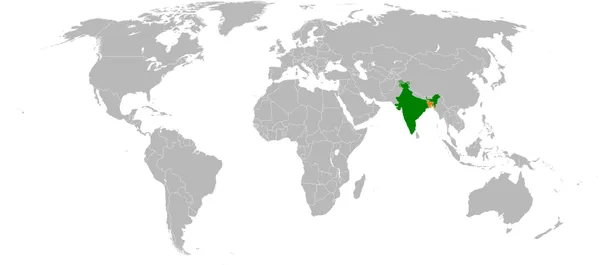
The bilateral relations between the neighboring People's Republic of Bangladesh and the Republic of India formally began in 1971 with India's recognition of an independent Bangladesh. Bangladesh and India are common members of SAARC, BIMSTEC, IORA and the Commonwealth. The two countries share many cultural ties. In particular, Bangladesh and the east Indian states of West Bengal and Tripura are Bengali-speaking. India played a pivotal role in Bangladesh's independence by providing direct military intervention and diplomatic support during the 1971 Liberation War against Pakistan. The Indian Army's involvement, culminating in the surrender of Pakistani forces in Dhaka on December 16, 1971, was instrumental in the birth of Bangladesh, fostering initial goodwill and close ties under Sheikh Mujibur Rahman's Awami League government. Post-independence relations remained friendly in the early 1970s, marked by the 1972 Indo-Bangla Treaty of Friendship, Cooperation, and Peace, which committed both nations to non-aggression and mutual assistance. However, tensions emerged after the 1975 assassination of Mujibur Rahman and the subsequent rise of military rule under Ziaur Rahman and later Hussain Muhammad Ershad (1982–1990). These regimes pursued policies of economic diversification and non-alignment, straining ties with India amid unresolved issues such as border enclaves, smuggling, and migration disputes. Since the independence of Bangladesh, India has been accused of exerting dominance or "hegemony" in political, economic, military, and cultural spheres of Bangladesh. The issue is often debated in the context of bilateral relations, with proponents citing India's role in the 1971 Liberation War and subsequent aid, trade dependencies, and security cooperation as evidence of asymmetric power dynamics. Critics, including some Bangladeshi nationalists, argue it manifests in areas like border disputes, water-sharing agreements (e.g., the Ganges Water Treaty), and political interventions, while Indian perspectives emphasize mutual benefits and regional stability under frameworks like SAARC and BIMSTEC.
Also on this shelf
Greige goods.
Carnival in the Netherlands.
See also
Uncatalogued shelfText from Wikipedia; plate via Wikimedia Commons. Text CC BY-SA 4.0; plate freely licensed (see Commons). Source record. Images and catalogue data are reproduced from open-access collections.