Textiles and Dress
Brook Farm
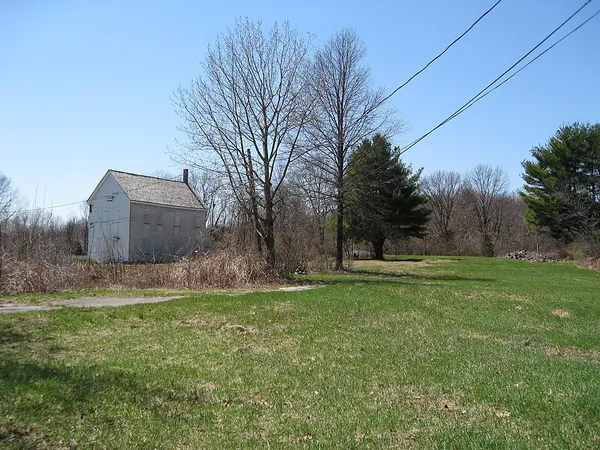
Brook Farm, also called the Brook Farm Institute of Agriculture and Education or the Brook Farm Association for Industry and Education, was a utopian experiment in communal living in the United States in the 1840s. It was founded by former Unitarian minister George Ripley and his wife Sophia Ripley at the Ellis Farm in West Roxbury, Massachusetts (nine miles outside of downtown Boston), in 1841 and was inspired in part by the ideals of transcendentalism, a religious and cultural philosophy based in New England. Founded as a joint stock company, it promised its participants a portion of the farm's profits in exchange for an equal share of the work. Brook Farmers believed that by sharing the workload, they would have ample time for leisure and intellectual pursuits. Life on Brook Farm was based on balancing labor and leisure while working together for the community's benefit. Each member could choose whatever work they found most appealing and all were paid equally, including women. Revenue came from farming and from selling handmade products like clothing, as well as fees paid by the farm's many visitors. The main source of income was the school, which was overseen by Mrs. Ripley. A preschool, primary school, and a college preparatory school attracted children internationally and each child was charged for an education. Adult education was also offered. The community was never financially stable and had difficulty profiting from its agricultural pursuits. By 1844, the Brook Farmers adopted a societal model based on the socialist concepts of Charles Fourier and began publishing The Harbinger as an unofficial journal promoting Fourierism. Following his vision, the community began building an ambitious structure called the Phalanstery. When the uninsured building burned down, the community was financially devastated and never recovered. It was fully closed by 1847. Despite the commune's failure, many Brook Farmers looked back on their experience favorably. The commune's critics included Charles Lane, founder of another utopian community, Fruitlands. Nathaniel Hawthorne was a founding member of Brook Farm, though not a strong adherent of the community's ideals.
Also on this shelf
Faith Ringgold.
1800s (decade).
See also
Uncatalogued shelfText from Wikipedia; plate via Wikimedia Commons. Text CC BY-SA 4.0; plate freely licensed (see Commons). Source record. Images and catalogue data are reproduced from open-access collections.