Textiles and Dress
Hanfu
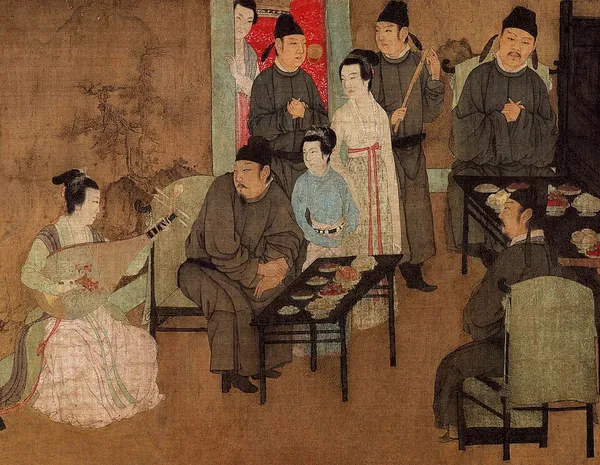
Hanfu (simplified Chinese: 汉服; traditional Chinese: 漢服; pinyin: Hànfú, lit. "Han clothing"), also known as Hanzhuang (simplified Chinese: 汉装; traditional Chinese: 漢裝; pinyin: Hànzhuāng, "Han attire") or traditional Chinese clothing, are historical Chinese clothings worn by the majority Han Chinese people from at least the 2nd millennium BC to the mid-17th century AD — encompassing nearly all of the recorded history of China up to the end of the Ming dynasty — until violent conquest and forced assimilation by the Qing dynasty led to their replacement by the Manchu qizhuang and magua in a historical event known as Tifayifu. Due to the rise of China since the start of the 21st century, there is currently a growing cultural movement among the younger generations in Mainland China and the Chinese diaspora to revive and reinstate hanfu as the genuine, orthodox representative of Chinese culture and aesthetics, as opposed to the Manchu-inspired qipao and tangzhuang and the Japanese school uniform (gakuran)-inspired Mao suit. There are several representative styles of hanfu, such as the ruqun (a long skirt worn high over the upper garment), aoqun (an upper garment with a long underskirt), beizi (a loose-fitting, open-front coat) and shenyi (one-piece robe), and the shanku (an upper-body garment with trousers). Historically, the most common formal style of hanfu consists of a broad-sleeved robe named paofu for men, or the pairing of an upper garment named ru (jacket) with a lower garment named qun (skirt) for women. In almost all these styles, at least one of the upper garments (either the overgarment or the undergarment), will have crossing collars (known as jiaoling) with the left front panel overlapping the right panel and fastened at the right waist (known as youren), typically by a knotted ribbon. In addition to clothing, hanfu also includes several forms of headwear, footwear and accessories, such as belts and buckles, hand fans, jewellery, jade belt pendants (yupei), bracelets, and sachets. As with many traditional Chinese things, hanfu derives its name from the Han dynasty, the first golden age of China with international sphere of influence.
Also on this shelf
Blackface.
Deirdre Lenihan.
See also
Uncatalogued shelfText from Wikipedia; plate via Wikimedia Commons. Text CC BY-SA 4.0; plate freely licensed (see Commons). Source record. Images and catalogue data are reproduced from open-access collections.