Textiles and Dress
Cultural depictions of spiders
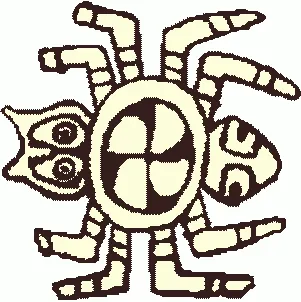
Throughout history, spiders have been depicted in popular culture, mythology, and symbolism. From African folklore to Greek mythology, the spider has been used to represent a variety of things, and endures into the present day with characters such as Shelob from The Lord of the Rings and Spider-Man from the eponymous comic series. It is also a symbol of mischief and malice for its toxic venom and the slow death it causes, which is often seen as a curse. In addition, the spider has inspired creations from an ancient geoglyph to a modern steampunk spectacle. Spiders have been the focus of fears, stories and mythologies of various cultures for centuries. The spider has symbolized patience and persistence due to its hunting technique of setting webs and waiting for its prey to become ensnared. Numerous cultures attribute the spider's ability to spin webs with the origin of spinning, textile weaving, basket weaving, knotwork, string games and net making. Spiders are associated with creation myths because they seem to weave their own artistic worlds. Philosophers often use the spider's web as a metaphor or analogy, and today, terms such as the Internet or World Wide Web evoke the inter-connectivity of a spider web. Many goddesses associated with spiders and other female portrayals reflect observations of their specific female-dominated copulation.
Also on this shelf
EDUN.
1960s in fashion.
See also
Uncatalogued shelfText from Wikipedia; plate via Wikimedia Commons. Text CC BY-SA 4.0; plate freely licensed (see Commons). Source record. Images and catalogue data are reproduced from open-access collections.