Textiles and Dress
Anatolian rug
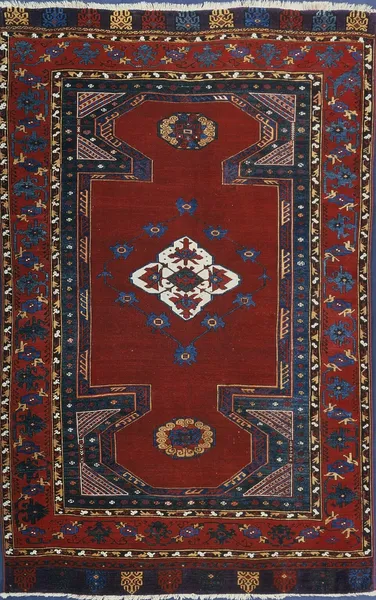
Anatolian rug or Turkish carpet (Turkish: Türk Halısı) is a term of convenience, commonly used today to denote rugs and carpets woven in Anatolia and its adjacent regions. Geographically, its area of production can be compared to the territories which were historically dominated by the Ottoman Empire. It denotes a knotted, pile-woven floor or wall covering which is produced for home use, local sale, and export, and religious purpose. Together with the flat-woven kilim, Anatolian rugs represent an essential part of the regional culture, which is officially understood as the Culture of Turkey today, and derives from the ethnic, religious and cultural pluralism of one of the most ancient centres of human civilisation. Rug weaving represents a traditional craft dating back to prehistoric times. Rugs were woven much earlier than even the oldest surviving rugs like the Pazyryk rug would suggest. During its long history, the art and craft of the woven carpet has absorbed and integrated different cultural traditions. Traces of Byzantine design can be observed in Anatolian rugs; Turkic peoples migrating from Central Asia, as well as Armenian people, and other Caucasian, as well as Kurdish tribes either living in, or migrating to Anatolia at different times in history contributed their traditional motifs and ornaments. The arrival of Islam and the development of the Islamic art has profoundly influenced the Anatolian rug design. Its ornaments and patterns thus reflect the political history and social diversity of the area. Since rug export was so popular within Iran, the cultural motives and display on the Anatolian rugs vary. Within the group of oriental carpets, the Anatolian rug is distinguished by particular characteristics of its dyes and colours, motifs, textures and techniques. Examples range in size from small pillows (yastik) to large, room-sized carpets. The earliest surviving examples of Anatolian rugs known today date from the thirteenth century. Distinct types of rugs have been woven ever since in court manufactures and provincial workshops, village homes, tribal settlements, or in the nomad's tent. Rugs were simultaneously produced at all different levels of society, mainly using sheep wool, cotton and natural dyes.
Also on this shelf
George Home, 1st Earl of Dunbar.
Fanlingpao.
See also
Uncatalogued shelfText from Wikipedia; plate via Wikimedia Commons. Text CC BY-SA 4.0; plate freely licensed (see Commons). Source record. Images and catalogue data are reproduced from open-access collections.