Textiles and Dress
Disco
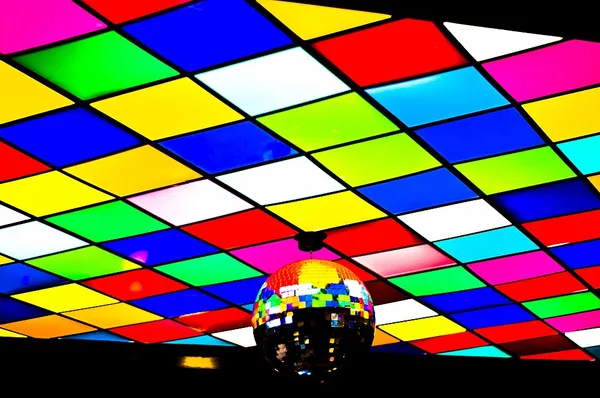
Disco is a genre of dance music and a subculture that emerged in the late 1960s from the United States' urban nightlife scene. Its sound is typified by four-on-the-floor beats, syncopated basslines, string sections, brass and horns, electric pianos, synthesizers, and electric rhythm guitars. Discothèques as a venue were mostly a French invention, imported to the United States with the opening of Le Club, a members-only restaurant and nightclub located at 416 East 55th Street in Manhattan, by French expatriate Olivier Coquelin, on New Year's Eve 1960. Disco music as a genre started as a mixture of music from venues popular among African Americans, Latino Americans, and Italian Americans in New York City (especially Brooklyn), Philadelphia, and Baltimore during the late 1960s to the mid-to-late 1970s. Disco can be seen as a reaction by the 1960s counterculture to both the dominance of rock music and the stigmatization of dance music at the time. Several dance styles were developed in the United States during the period of disco's popularity in the 1970s, including "the Bump", "the Hustle", "the Watergate", "the Continental", and "the Busstop". During the 1970s, disco music was developed further, mainly by artists from the United States as well as from Europe. While performers garnered public attention, record producers working behind the scenes played an important role in developing the genre. By the late 1970s, most major U.S. cities had thriving disco club scenes, and DJs would mix dance records at clubs such as Studio 54 in Manhattan, a venue popular among celebrities. Nightclub-goers often wore expensive, extravagant outfits, consisting predominantly of loose, flowing pants or dresses for ease of movement while dancing. There was also a thriving drug subculture in the disco scene, particularly for drugs that would enhance the experience of dancing to the loud music and the flashing lights, such as cocaine and quaaludes, the latter being so common in disco subculture that they were nicknamed "disco biscuits". Disco clubs were also associated with promiscuity as a reflection of the sexual revolution of this era in popular history.
Also on this shelf
Culture of Morocco.
Draped garment.
See also
Uncatalogued shelfText from Wikipedia; plate via Wikimedia Commons. Text CC BY-SA 4.0; plate freely licensed (see Commons). Source record. Images and catalogue data are reproduced from open-access collections.