Textiles and Dress
Greek Muslims
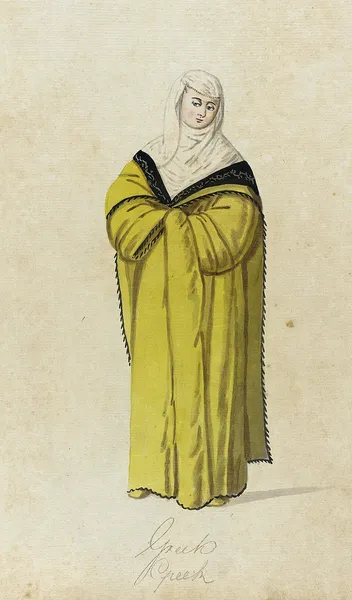
Greek Muslims, also known as Grecophone Muslims, are Muslims of Greek ethnic origin whose adoption of Islam (and often the Turkish language and identity in more recent times) dates either from the contact of early Islamic caliphates with the Byzantine Empire or to the period of Ottoman rule in the southern Balkans and Anatolia. In more recent times, they consist primarily of descendants of Ottoman-era converts to Islam from Greek Macedonia (e.g., Vallahades), Crete (Cretan Muslims), and northeastern Anatolia (particularly in the regions of Trabzon, Gümüşhane, Sivas, Erzincan, Erzurum, and Kars). Despite their ethnic Greek origin, the contemporary Grecophone Muslims of Turkey have been steadily assimilated into the Turkish-speaking Muslim population. Sizable numbers of Grecophone Muslims, not merely the elders but even young people, have retained knowledge of their respective Greek dialects, such as Cretan and Pontic Greek. Because of their gradual Turkification, as well as the close association of Greece and Greeks with Orthodox Christianity and their perceived status as a historic, military threat to the Turkish Republic, very few are likely to call themselves Greek Muslims. In Greece, Greek-speaking Muslims are not usually considered as forming part of the Greek nation. In the late Ottoman period, particularly after the Greco-Turkish War (1897), several communities of Greek Muslims from Crete and southern Greece were also relocated to Libya, Lebanon, and Syria, where, in towns like al-Hamidiyah, some of the older generation continue to speak Greek. Historically, Greek Orthodoxy has been associated with being Romios (i.e., Greek) and Islam with being Turkish, despite ethnicity or language. Most Greek-speaking Muslims in Greece left for Turkey during the 1920s population exchanges under the Convention Concerning the Exchange of Greek and Turkish Populations (in return for Turkish-speaking Christians such as the Karamanlides). Due to the historical role of the millet system, religion and not ethnicity or language was the main factor used during the exchange of populations. All Muslims who departed Greece were seen as "Turks," whereas all Orthodox people leaving Turkey were considered "Greeks," again regardless of their ethnicity or language.
Also on this shelf
Guo Pei.
Alpha Industries.
See also
Uncatalogued shelfText from Wikipedia; plate via Wikimedia Commons. Text CC BY-SA 4.0; plate freely licensed (see Commons). Source record. Images and catalogue data are reproduced from open-access collections.