Textiles and Dress
Dashiki
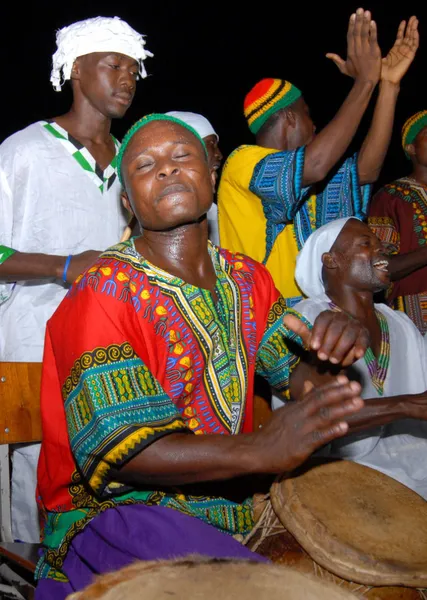
The dashiki (, də-SHEE-kee, dah-) is a colorful garment that covers the top half of the body, worn mostly in West Africa. It has formal and informal versions and varies from simple draped clothing to fully tailored suits. A common form is a loose-fitting pullover garment, with an ornate V-shaped collar, and tailored and embroidered neck and sleeve lines. It is frequently worn with a brimless kufi cap (which is worn in Islamic communities in Africa and the African diaspora) and pants. It has been popularized and claimed by communities in the African diaspora, especially African Americans. The now trademark dashiki design was born from a wax print pattern by Dutch designer Toon van de Mannaker for Netherlands-based Vlisco. Van de Mannaker's print pattern was inspired by the silk embroidered tunics worn by Christian Ethiopian noblewomen in the 19th century. The pattern became known as the Angelina pattern in the West African market after the release of Ghanaian highlife hit song "Angelina" by The Sweet Talks. In Congo it is known as Miriam Makeba or Ya Mado: Miriam Makeba was a South African musician who often wore wax prints; "Ya mado!" is a memorable lyric from Fabregas's song "Mascara", which features dancers wearing dashikis in its music video. The word "dashiki" comes from dàńṣíkí, a Yoruba loanword from the Hausa dan ciki, literally meaning 'shirt' or 'inner garment' (as compared to the outer garment, babariga).
Also on this shelf
Japanese clothing during the Meiji period.
Jacob Kroger.
See also
Uncatalogued shelfText from Wikipedia; plate via Wikimedia Commons. Text CC BY-SA 4.0; plate freely licensed (see Commons). Source record. Images and catalogue data are reproduced from open-access collections.