Textiles and Dress
God in Christianity
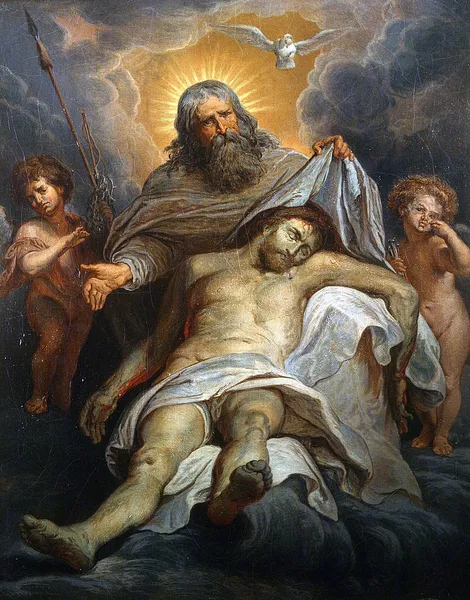
In Christianity, God (also referred to as Yahweh, Jehovah, or the Lord) is the eternal, supreme deity who created and preserves all things. Christians believe in a monotheistic conception of God, which is both transcendent (wholly independent of, and removed from, the material universe) and immanent (involved in the material universe). Most Christians believe in a singular God that exists in a Trinity, which consists of three Persons: God the Father, God the Son (Jesus), and God the Holy Spirit. Some Christian teachings on the transcendence, immanence, and involvement of God in the world and his love for humanity exclude the belief that God is of the same substance as the created universe (that is, rejection of pantheism) but accept that God the Son assumed hypostatically united human nature, thus becoming man in a unique event known as "the Incarnation". Early Christian views of God were expressed in the Pauline epistles and the early Christian creeds, which proclaimed one God and the divinity of Jesus. Although some early sects of Christianity, such as the Jewish-Christian Ebionites, protested against the deification of Jesus, the concept of Jesus being one with God was accepted by the majority of Gentile Christians. This formed one aspect of the split of early Christianity and Judaism, as Gentile Christian views of God began to diverge from the traditional Jewish teachings of the time. The theology of the attributes and nature of God has been discussed since the earliest days of Christianity, with Irenaeus writing in the 2nd century: "His greatness lacks nothing, but contains all things". In the 8th century, John of Damascus listed eighteen attributes which remain widely accepted. As time passed, Christian theologians developed systematic lists of these attributes, some based on statements in the Bible (e.g., the Lord's Prayer, stating that the Father is in Heaven), others based on theological reasoning. The "Kingdom of God" is a prominent phrase in the synoptic Gospels, and while there is near unanimous agreement among scholars that it represents a key element of the teachings of Jesus, there is little scholarly agreement on its exact interpretation. Although the New Testament does not have a formal doctrine of the Trinity as such, "it does repeatedly speak of the Father, the Son, and the Holy Spirit...
Also on this shelf
Byzantine dress.
Amauti.
See also
Uncatalogued shelfText from Wikipedia; plate via Wikimedia Commons. Text CC BY-SA 4.0; plate freely licensed (see Commons). Source record. Images and catalogue data are reproduced from open-access collections.