Textiles and Dress
1795–1820 in Western fashion
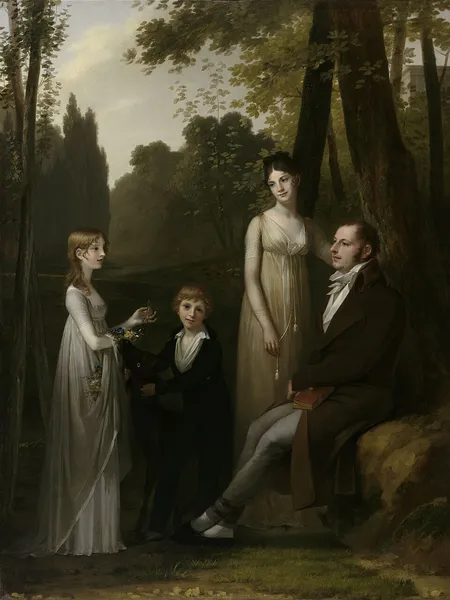
Fashion in the period 1795–1820 in European and European-influenced countries saw the final triumph of undress or informal styles over the brocades, lace, periwigs and powder of the earlier 18th century. In the aftermath of the French Revolution, no one wanted to appear to be a member of the French aristocracy, and people began using clothing more as a form of individual expression than as a pure indication of social status. As a result, the shifts that occurred in fashion at the turn of the 19th century granted the opportunity to present new public identities that also provided insights into their private selves. Katherine Aaslestad indicates how "fashion, embodying new social values, emerged as a key site of confrontation between tradition and change." For women's dress, the day-to-day outfit of the skirt and jacket style were practical and tactful, recalling the working-class woman. Women's fashions followed classical ideals, and stiffly boned stays were abandoned in favor of softer, less boned corsets. This natural figure was emphasized by being able to see the body beneath the clothing. Visible breasts were part of this classical look, and some characterized the breasts in fashion as solely aesthetic and sexual. This era of British history is known as the Regency period, marked by the regency between the reigns of George III and George IV. But the broadest definition of the period, characterized by trends in fashion, architecture, culture, and politics, begins with the French Revolution of 1789 and ends with Queen Victoria's 1837 accession. The names of popular people who lived in this time are still famous: Napoleon and Josephine, Ludwig van Beethoven, Juliette Récamier, Jane Austen, Johann Wolfgang Von Goethe, Percy Bysshe Shelley, Lord Byron, Beau Brummell, Lady Emma Hamilton, Queen Louise of Prussia and her husband Frederick William III, and many more. Beau Brummell introduced trousers, perfect tailoring, and unadorned, immaculate linen as the ideals of men's fashion. In Germany, republican city-states relinquished their traditional, modest, and practical garments and started to embrace the French and English fashion trends of short-sleeved chemise dresses and Spencer jackets. American fashion trends emulated French dress, but in a toned-down manner, with shawls and tunics to cope with the sheerness of the chemise.
Also on this shelf
Dudou.
Dalmatic.
See also
Uncatalogued shelfText from Wikipedia; plate via Wikimedia Commons. Text CC BY-SA 4.0; plate freely licensed (see Commons). Source record. Images and catalogue data are reproduced from open-access collections.