Textiles and Dress
Harlem Renaissance
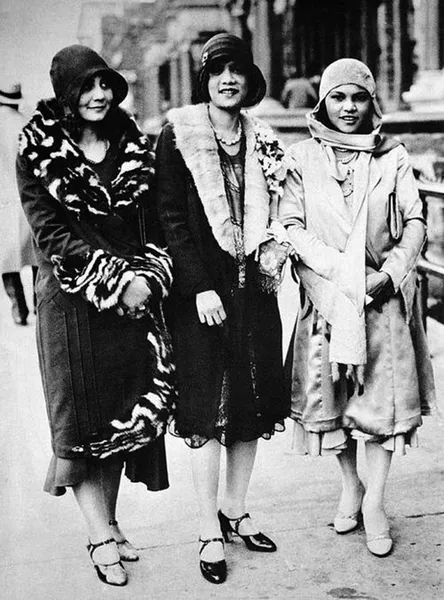
The Harlem Renaissance was an intellectual and cultural movement of African-American music, dance, art, fashion, literature, theater, politics, and scholarship centered in Harlem, New York City, spanning the 1920s and 1930s. At the time, it was known as the "New Negro Movement", named after The New Negro, a 1925 anthology edited by philosopher Alain Locke, who is regarded as the "dean" of the Harlem Renaissance. The movement also included new African-American cultural expression across other urban areas in the Northeastern United States and the Midwestern United States. It was prompted by a renewed militancy in the general struggle for civil rights, combined with the Great Migration of African-American workers fleeing the racist conditions of the Jim Crow Deep South. Harlem was the final destination of the largest number of those who migrated north, and had also seen significant Black immigration from British, French and other colonies in the Caribbean. Though the movement was geographically tied to Harlem, few of the associated visual artists lived in the area, while those who did (such as Aaron Douglas) had migrated elsewhere by the end of World War II. Many Francophone black writers from African and Caribbean colonies who lived in Paris were influenced by the movement. The zenith of this "flowering of Negro literature", as James Weldon Johnson described the Harlem Renaissance, took place between approximately 1924—when Opportunity: A Journal of Negro Life hosted a party for black writers where many white publishers were in attendance—and 1929, the year of the stock-market crash and the beginning of the Great Depression. The Harlem Renaissance is considered to have been a creative crucible for African-American art-making and its institutionalisation within white-dominated museums and cultural institutions.
Also on this shelf
Amsterdam.
Buckram.
See also
Uncatalogued shelfText from Wikipedia; plate via Wikimedia Commons. Text CC BY-SA 4.0; plate freely licensed (see Commons). Source record. Images and catalogue data are reproduced from open-access collections.