Textiles and Dress
Armenian dance
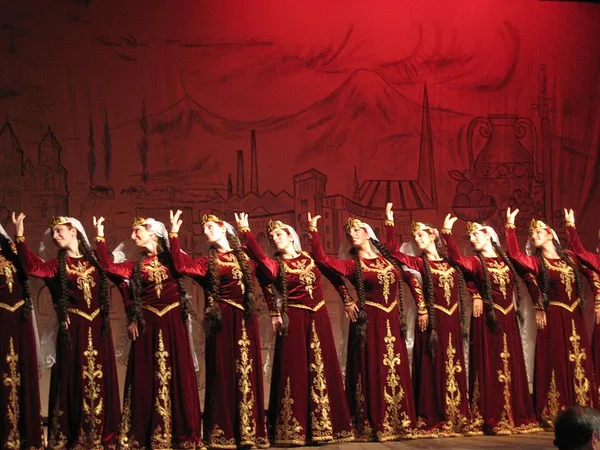
The Armenian dance (Armenian: Հայկական պար) heritage has been considered the oldest and most varied in its respective region. From the fifth to the third millennia B.C., in the higher regions of Armenia, the land of Ararat, there are rock paintings of scenes of country dancing. These dances were most likely accompanied by certain kinds of songs or musical instruments. In the fifth century, Moses of Khoren (Movsés Khorenats'i) himself had heard of how the old descendants of Aram (that is Armenians) make mention of these things (epic tales) in the ballads for the lyre and their songs and dances. Traditional dancing is popular among expatriate Armenians, and has been exported to international folk dance groups and circle dance groups. Dancers wear traditional costumes to embody the history of their culture and to tell their ancestors' stories. The design of these costumes is influenced by factors such as religious traditions, family methods, and practicality. The coloring and beading of the costumes tie the dance and the tradition together. The movements of the Armenian cultural dance are performed for audiences around the world.
Also on this shelf
Edith Rosenbaum.
Incroyables and merveilleuses.
See also
Uncatalogued shelfText from Wikipedia; plate via Wikimedia Commons. Text CC BY-SA 4.0; plate freely licensed (see Commons). Source record. Images and catalogue data are reproduced from open-access collections.