Textiles and Dress
Ganga-Jamuni tehzeeb
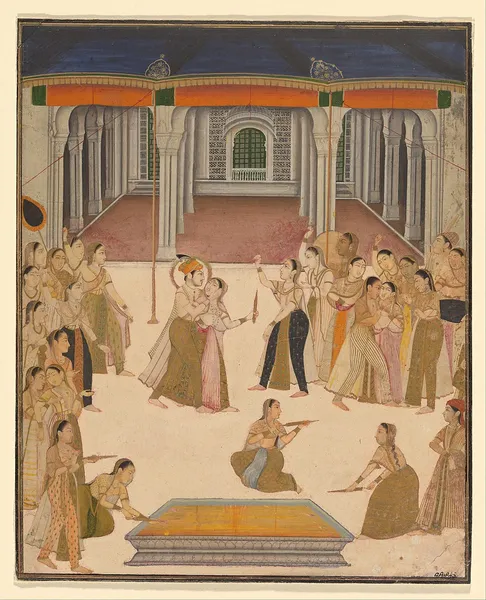
Ganga–Jamuni Tehzeeb (Hindustani for Ganges–Yamuna Culture), also spelled as Ganga-Jamni Tehzeeb or just Hindustani Tehzeeb, is the composite high culture of the central plains of northern India, especially the doab region of Ganges and Yamuna rivers, that is a syncretic fusion of Hindu cultural elements with Muslim cultural elements. The composite Ganga-Jamuni culture emerged due to the interaction between Hindus and Muslims in the history of South Asia. The tehzeeb (culture) includes a particular style of speech, literature, recreation, costume, manners, worldview, art, fashion, architecture and cuisine which more or less pervades the Hindustan region of the plains, Northern South Asia as a whole and the old city of Hyderabad in South India. Ganga Jamuni culture manifests itself as adherents of different religions in India celebrating each other's festivals, as well as communal harmony in India. Ganga-Jamuni tehzeeb, is a poetic Awadhi phrase for the distinctive and syncretic Hindu-Muslim culture, is reflected in the fused spiritual connotations, forms, symbols, aesthetics, crafts and weaves, for example, Kashmiri Muslim carpet makers feature Durga in their patterns, Muslim sculptors making idols of Durga, and Hindu craftsmen create the Muharram tazia.
Also on this shelf
Fashion photography.
Cato the Elder.
See also
Uncatalogued shelfText from Wikipedia; plate via Wikimedia Commons. Text CC BY-SA 4.0; plate freely licensed (see Commons). Source record. Images and catalogue data are reproduced from open-access collections.