Textiles and Dress
Court uniform and dress in the United Kingdom
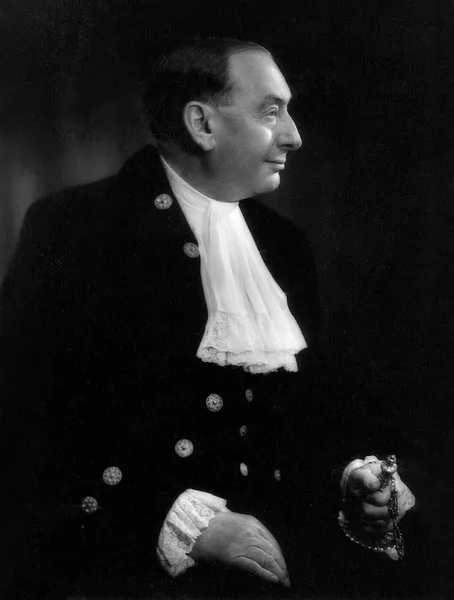
Court uniform and dress in the United Kingdom were worn by those in attendance at the royal court up until the mid-20th century and are still worn as formal dress by certain office-holders. Specifically, court uniform was worn by those holding particular offices associated with the Crown (including certain specified civil servants and members of the Royal Household, and all Privy Counsellors). Its use extended to the diplomatic service and officials working in the colonies and dominions. A range of office-holders were entitled to wear it, with different classes of uniform specified for different grades of official. Introduced in the early 1820s, it is still worn today on state occasions by a select number of dignitaries both in the UK and in certain other Commonwealth realms. Court dress, on the other hand, is a stylized form of clothing deriving from fashionable eighteenth-century wear, which was directed to be worn at court by those not entitled to a court uniform. For men, it comprised a matching tailcoat and waistcoat, breeches and stockings, lace cuffs and cravat, together with a cocked hat and a sword. For women, a white or cream evening gown was to be worn, together with a train and other specified accoutrements. Male court dress is still worn today as part of the formal dress of judges and King's Counsel, and is also worn by certain lord mayors, parliamentary officials, and high sheriffs of counties. Formerly, female court dress was required wear for debutantes being presented at court, but it ceased to be regularly worn after the Second World War, as afternoon presentations largely replaced evening courts. Forms of courtly dress were at one time dictated by fashion, but they later came to be subject to (increasingly detailed) regulations. By the end of the 18th century court dress, for men and for women, was becoming more fixed in style and beginning to look rather antiquated. From the end of the 19th century, precise descriptions were laid down (of court dress and court uniform) in an official publication called Dress Worn at Court, which was issued with the authority of the Lord Chamberlain. The 1937 edition remains authoritative for those rare circumstances in which court uniform or court dress are still required.
Also on this shelf
Headscarf controversy in Turkey.
Fabiola Jean-Louis.
See also
Uncatalogued shelfText from Wikipedia; plate via Wikimedia Commons. Text CC BY-SA 4.0; plate freely licensed (see Commons). Source record. Images and catalogue data are reproduced from open-access collections.