Textiles and Dress
History of the cotton industry in Catalonia
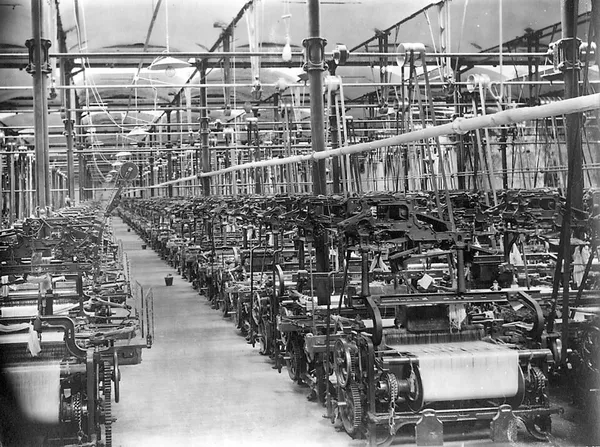
The cotton industry was the first and leading industry of Catalan industrialisation that led by the mid-19th century to Catalonia becoming the main industrial region of Spain. It is the one Mediterranean exception to the tendency for early industrialisation to be concentrated in northern Europe. The Catalan cotton industry, in common with many European countries and the United States, was the first large-scale application of modern technology and the factory system. The origins of this industry can be traced back to the early 18th century when it began producing printed cloth chintz, known as indianes locally. This was driven by government bans on imported chintz from India and the opening of trading opportunities with Spain's American colonies to Catalan merchants. Initially, spinning was not a significant part of this industry, but it gained momentum in the early 19th century with the introduction of British spinning technology. Industrialisation occurred in the 1830s after adoption of the factory system, and the removal of restrictions by Britain on the emigration of expert labour (1825) and of machinery (1842). Steam power was introduced, but the cost of imported coal and steam engines, led to a shift towards the use of water power from the late 1860s. Government policy saw the proliferation of more than 75 industrial colonies (Catalan: colònies industrials) on the rivers of rural Catalonia seeking water power, cheaper labour and land. From the mid-19th century the industry was increasingly protected as the costs of raw cotton, energy & machinery in Spain made it difficult to compete globally. The industry came to rely almost entirely on the internal market and the remaining American colonies of Cuba and Puerto Rico. From the Great Depression, the industry declined. There was increasing strife in Spain, a declining economy, civil war and then from 1939, the policy of autarky locked the industry out of the post World War II global growth and investment. The opening of the Spanish economy in the 1960s, social changes that caused the industrial colony system to collapse and the oil shock of the 1970s saw the effective end of the industry. The industry left a legacy of extraordinary architecture. The cotton magnates encouraged and funded the best modernisme architectural achievements, whether they were factories, private residences or apartment buildings.
Also on this shelf
Embroidery of India.
Finger sleeve.
See also
Uncatalogued shelfText from Wikipedia; plate via Wikimedia Commons. Text CC BY-SA 4.0; plate freely licensed (see Commons). Source record. Images and catalogue data are reproduced from open-access collections.