Textiles and Dress
Ironing
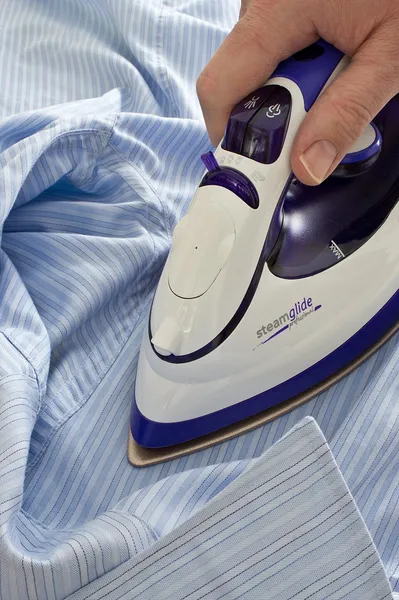
Ironing is the use of an iron, usually heated, to remove wrinkles and unwanted creases from fabric. The heating is commonly done to a temperature of 180–220 °C (360–430 °F), depending on the fabric. Ironing works by loosening the bonds between the long-chain polymer molecules in the fibres of the material. While the molecules are hot, the fibres are straightened by the weight of the iron, and they hold their new shape as they cool. Some fabrics, such as cotton, require the addition of water to loosen the intermolecular bonds. Many modern fabrics (developed in or after the mid-twentieth century) are advertised as needing little or no ironing. Permanent press clothing was developed to reduce the ironing necessary by combining wrinkle-resistant polyester with cotton. The first known use of heated metal to "iron" clothes is known to have occurred in China. The electric iron was invented in 1882, by Henry W. Seely. Seely patented his "electric flatiron" on June 6, 1882 (U.S. Patent no. 259,054).
Also on this shelf
History of red.
Incroyables and merveilleuses.
See also
Uncatalogued shelfText from Wikipedia; plate via Wikimedia Commons. Text CC BY-SA 4.0; plate freely licensed (see Commons). Source record. Images and catalogue data are reproduced from open-access collections.