Textiles and Dress
German Brazilians
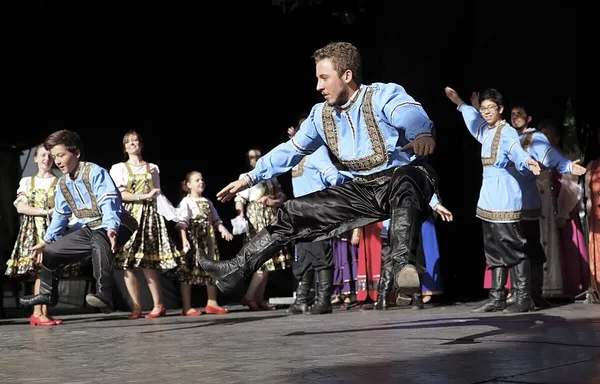
German Brazilians (German: Deutschbrasilianer, Hunsrik: Deitschbrasiliooner, Portuguese: teuto-brasileiros) refers to Brazilians of full or partial German ancestry. German Brazilians live mostly in the country's South Region, with a smaller but still significant percentage living in the Southeast Region. Between 1824 and 1972, about 260,000 Germans settled in Brazil, the fifth largest nationality to immigrate after the Portuguese, Italians, Spaniards and Japanese. The first German immigrants to Brazil arrived as early as the 16th century, although organized immigration began only in the 19th century. The causes of this process can be found in the frequent social problems that occurred in Europe and the abundance of land in Brazil. In 1986, Born and Dickgiesser estimated the number of German descendants in Brazil at 3.6 million. According to another survey, from 1999, by sociologist and former president of the Brazilian Institute of Geography and Statistics (IBGE), Simon Schwartzman, 3.6% of the Brazilians interviewed claimed to have German ancestry, a percentage that, in a population of about 200 million Brazilians, would represent 7.2 million descendants. In 2004, Deutsche Welle cited the number of 5 million Brazilians of German descent. According to a 2016 survey published by IPEA, in a universe of 46,801,772 names of Brazilians analyzed, 1,525,890 or 3.3% of them had the only or the last surname of Germanic origin. German immigration to Brazil began before the independence from Portugal and remained relatively constant until the 1960s. The reasons for this emigration lie, on one hand, in the socio-political-economic transformations that Germany underwent and, on the other, in the exceptional conditions that favored the attraction of European immigrants in Brazil. Between 1824 and 1972, about 260,000 Germans entered Brazil; the fifth nationality that immigrated the most to the country, after the Portuguese, Italians, Spaniards and Japanese. The Germans were among the nationalities that managed to preserve their culture in Brazil the most. Due to their isolation in hard-to-access regions, especially in the southern states, it was possible to create several predominantly Germanic colonies. One of the most significant examples of cultural maintenance was the proliferation of German schools in Brazil, as well as a German-language press.
Also on this shelf
Headscarf.
Gert Town, New Orleans.
See also
Uncatalogued shelfText from Wikipedia; plate via Wikimedia Commons. Text CC BY-SA 4.0; plate freely licensed (see Commons). Source record. Images and catalogue data are reproduced from open-access collections.