Textiles and Dress
Culottes
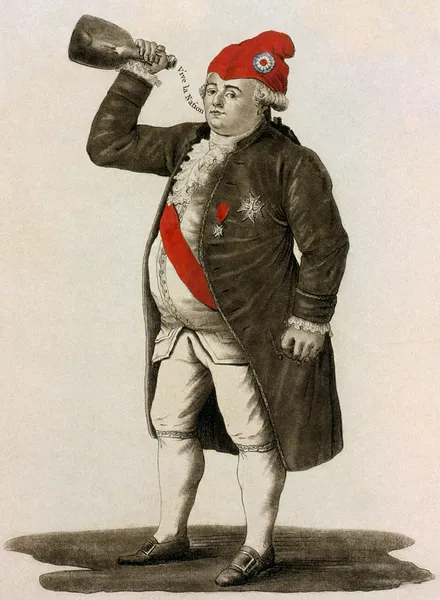
Culottes are an item of clothing worn on the lower half of the body. The term can refer to either split skirts, historical men's breeches, or women's underpants. The culotte is an example of a fashion-industry word taken from designs across history, languages and cultures, then being used to describe different garments, often creating confusion among historians and readers. The French word culotte is (a pair of) panties, pants, knickers, trousers, shorts, or (historically) breeches; derived from the French word culot, meaning the lower half of a thing, the lower garment in this case. In English-speaking history, culottes were originally the knee-breeches commonly worn by gentlemen of the European upper-classes from the late Middle Ages or Renaissance through the early 19th century. The style of tight trousers ending just below the knee was popularized in France during the reign of Henry III (1574–1589). Culottes were normally closed and fastened about the leg, to the knee, by buttons, a strap and buckle, or a draw-string. During the French Revolution of 1789–1799, working-class revolutionaries were known as "sans-culottes" – literally, "without culottes" – a name derived from their rejection of aristocratic apparel. In the United States, only the first five presidents, from George Washington (1732-1799) through James Monroe (1758-1831), wore culottes according to the style of the late 18th century. John Quincy Adams (1767-1848) wore long trousers instead of knee breeches at his inaugural ceremony in 1825, thus becoming the first president to have made the change of dress.
Also on this shelf
Anti-Italian sentiment.
Cultural impact of Shakira.
See also
Uncatalogued shelfText from Wikipedia; plate via Wikimedia Commons. Text CC BY-SA 4.0; plate freely licensed (see Commons). Source record. Images and catalogue data are reproduced from open-access collections.