Textiles and Dress
Aso olona
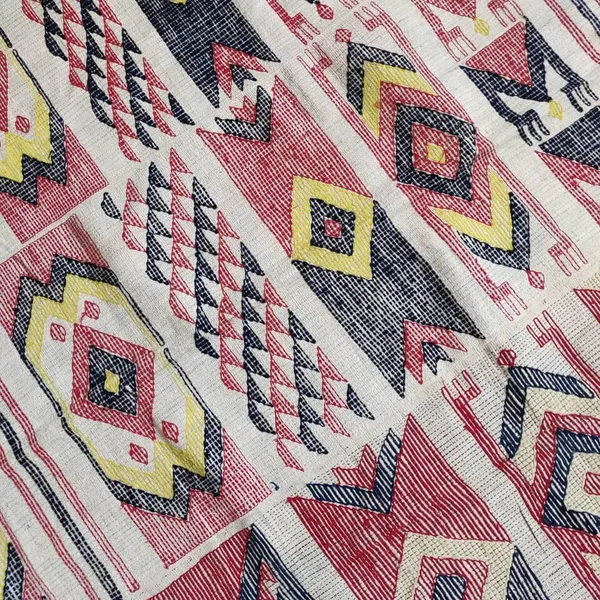
Aso olona is a traditional Yoruba textile known for its intricate geometric patterns and cultural significance, particularly among the Ijebu subgroup. The term "Aso olona" translates to "cloth with patterns" in the Yoruba language. These can come with motifs like the chameleon, tortoise and mudfish. The Aso olona is often woven with symbols that carry meanings. It is used in various traditional Yoruba attires, including the Kaja or Pakaja, a Yoruba draped outfit. Also, Aso olona is used for Iro ati Buba, a combination of a loose-fitting blouse and a large wrapper. It's also paired with accessories like gele (head-tie), ipele (shawl), and adorned with beads and jewelry that hold cultural significance. Aso olona ipeles called Itagbe were especially common for Ogboni events. The cloth is used as a title cloth for the Ogboni/Oshugbo society, which is a powerful and secretive association of elders and leaders in Yoruba society. The cloth is also worn by chiefs, priests, and members of the society on special occasions, such as ceremonies, festivals, and rituals. It is regarded as a valuable heirloom and a symbol of authority and prestige. This fabric is not only a fashion statement but also a representation of identity and heritage. It is commonly used in significant events and ceremonies, showcasing the wearer's connection to Yoruba traditions. The Aso olona was traded widely in the Niger Delta area since the 15th century, the Portuguese exported these textiles to Brazil as trade items, there known as “pano da costa” (cloth from the coast). Among the geometric and zoomorphic motifs is that of the chameleon, the national symbol of Ijebu Yorubas. Aso olona was also sold by Ijebu traders in the mid 19th century to the Ijaws who also sold it to the Igbos to also be made in Akwete town and dubbed "Akwete", or Ndoki based on Ndoki town in Akwete or Ikaki by the Ijaws due to the common chameleon or tortoise motif. It was valued for its beauty and intricate designs. Aso olona continues to influence modern designers both in Nigeria and abroad.
Also on this shelf
Cope.
Beau Brummell.
See also
Uncatalogued shelfText from Wikipedia; plate via Wikimedia Commons. Text CC BY-SA 4.0; plate freely licensed (see Commons). Source record. Images and catalogue data are reproduced from open-access collections.