Science and Medicine
Chevalier Jackson
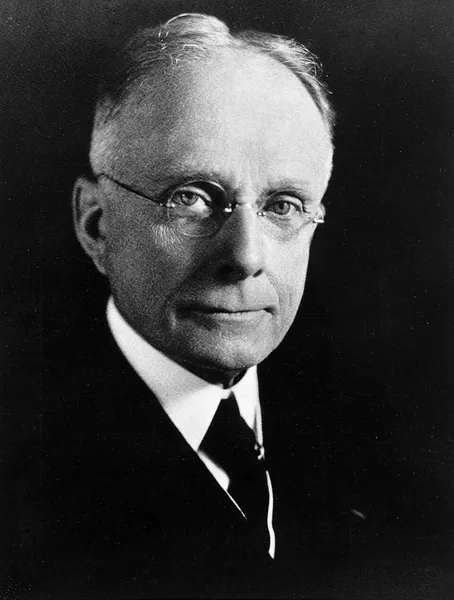
Chevalier Quixote Jackson (November 4, 1865 – August 16, 1958) was an American physician and pioneer in laryngology. He developed an esophagoscope in 1890 and a bronchoscope in 1899 that were major advances in the technology. He removed over 2,300 inhaled or swallowed items non-surgically from patients. His work in endoscopy and bronchoscopy resulted in improvements in the outcome for foreign body aspiration from a 98% mortality rate to a 98% survival rate. He used his esophagoscope for the dilation of esophageal strictures which occurred in children who accidentally ingested lye. He campaigned to have lye bottles listed as a poison which resulted in passage of the Federal Caustic Labeling Act of 1929. He was the first to identify erosive esophagitis in 1929 and he developed a standardized technique for tracheotomy that is still used today. He was chair of laryngology at Western Pennsylvania University (now the University of Pittsburgh), professor of laryngology at Jefferson Medical College, and Fellow of the College of Physicians of Philadelphia. He held collegiate chairs at multiple medical colleges in Philadelphia including Jefferson Medical College, Temple University, University of Pennsylvania, and Woman's Medical College of Pennsylvania. He was awarded the Elliot Cresson Medal in 1929. He served as president of Woman's Medical College of Pennsylvania from 1935 to 1941.
Also on this shelf
Elissa Slotkin.
Greater adjutant.
See also
Uncatalogued shelfText from Wikipedia; plate via Wikimedia Commons. Text CC BY-SA 4.0; plate freely licensed (see Commons). Source record. Images and catalogue data are reproduced from open-access collections.