Science and Medicine
Cotton Mather
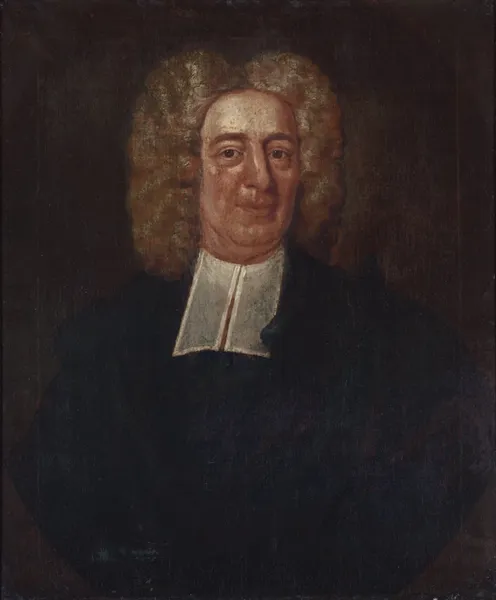
Cotton Mather (; February 12, 1663 – February 15, 1728) was a Puritan theologian, naturalist and historian active in New England as a clergyman, publishing numerous texts concerning subjects including demonology, morality, apologetics, natural history, zoology, botany, meteorology, astronomy, medicine, fossils, agriculture, and New England history. After being educated at Harvard College, he joined his father Increase Mather as minister of the Congregationalist Old North Meeting House in Boston, then part of the Massachusetts Bay Colony, where he preached for the rest of his life. He has been referred to as the "first American Evangelical". A major intellectual and public figure in English-speaking colonial America, Cotton Mather helped lead the successful revolt of 1689 against Sir Edmund Andros, the governor of New England appointed by King James II. Mather's subsequent involvement in the Salem witch trials of 1692–1693, which he defended in the book Wonders of the Invisible World (1693), attracted intense controversy in his own day and has negatively affected his historical reputation. As a historian of colonial New England, Mather is noted for his Magnalia Christi Americana (1702). Personally and intellectually committed to the waning social and religious orders in New England, Cotton Mather unsuccessfully sought the presidency of Harvard College. After 1702, Cotton Mather clashed with Joseph Dudley, the governor of the Province of Massachusetts Bay, whom Mather attempted unsuccessfully to drive out of power. Mather championed the new Yale College as an intellectual bulwark of Puritanism in New England. He corresponded extensively with European intellectuals and received an honorary Doctor of Divinity degree from the University of Glasgow in 1710. A promoter of the new experimental science in America, Cotton Mather carried out original research on plant hybridization. He also researched the variolation method of inoculation as a means of preventing smallpox contagion, which he learned about from an African-American slave whom he owned, Onesimus. He dispatched multiple reports on scientific matters to the Royal Society of London, which elected him as a fellow in 1713. Mather's promotion of inoculation against smallpox caused violent controversy in Boston during the outbreak of 1721.
Also on this shelf
COVID-19 pandemic in Bulgaria.
Economy of Cuba.
See also
Uncatalogued shelfText from Wikipedia; plate via Wikimedia Commons. Text CC BY-SA 4.0; plate freely licensed (see Commons). Source record. Images and catalogue data are reproduced from open-access collections.