Science and Medicine
African tick bite fever
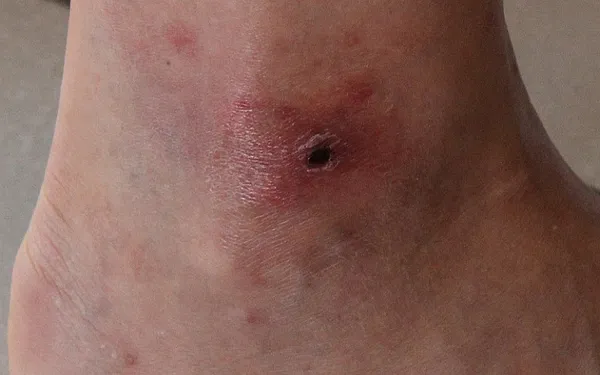
African tick bite fever (ATBF) is a bacterial infection spread by the bite of a tick. Symptoms may include fever, headache, muscle pain, and a rash. At the site of the bite there is typically a red skin sore with a dark center. The onset of symptoms usually occurs 4–10 days after the bite. Complications are rare but may include joint inflammation. Some people do not develop symptoms. Tick bite fever is caused by the bacterium Rickettsia africae. The bacterium is spread by ticks of the Amblyomma type. These generally live in tall grass or bush rather than in cities. The diagnosis is typically based on symptoms. It can be confirmed by culture, PCR, or immunofluorescence. There is no vaccine. Prevention is by avoiding tick bites by covering the skin, using DEET, or using permethrin treated clothing. Evidence regarding treatment, however, is limited. The antibiotic doxycycline appears useful. Chloramphenicol or azithromycin may also be used. The disease will also tend to resolve without treatment. The disease occurs in sub-Saharan Africa, the West Indies, and Oceania. It is relatively common among travelers to sub-Saharan Africa. Most infections occur between November and April. Outbreaks of the disease may occur. The earliest descriptions of the condition are believed to be from 1911. African tick bite fever is a type of spotted fever. It has previously been confused with Mediterranean spotted fever.
Also on this shelf
Earl Wilbur Sutherland Jr..
Demographics of the United States.
See also
Uncatalogued shelfText from Wikipedia; plate via Wikimedia Commons. Text CC BY-SA 4.0; plate freely licensed (see Commons). Source record. Images and catalogue data are reproduced from open-access collections.