Science and Medicine
Blalock–Thomas–Taussig shunt
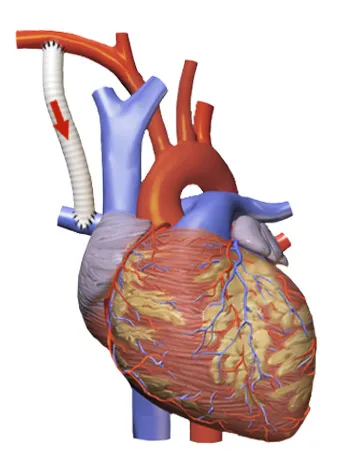
The Blalock–Thomas–Taussig shunt (BTT shunt), previously known as the Blalock–Taussig Shunt (BT shunt), is a surgical procedure used to increase blood flow to the lungs in some forms of congenital heart disease such as pulmonary atresia and tetralogy of Fallot, which are common causes of blue baby syndrome. The procedure involves connecting a branch of the subclavian artery or carotid artery to the pulmonary artery. In modern practice, this procedure is temporarily used to direct blood flow to the lungs and relieve cyanosis while the infant is waiting for corrective or definitive surgery when their heart is larger. The BTT shunt is used in the first step of the three-stage palliation (the Norwood procedure).
Also on this shelf
Conservation and restoration of human remains.
Florentine Renaissance art.
See also
Uncatalogued shelfText from Wikipedia; plate via Wikimedia Commons. Text CC BY-SA 4.0; plate freely licensed (see Commons). Source record. Images and catalogue data are reproduced from open-access collections.