Science and Medicine
African trypanosomiasis
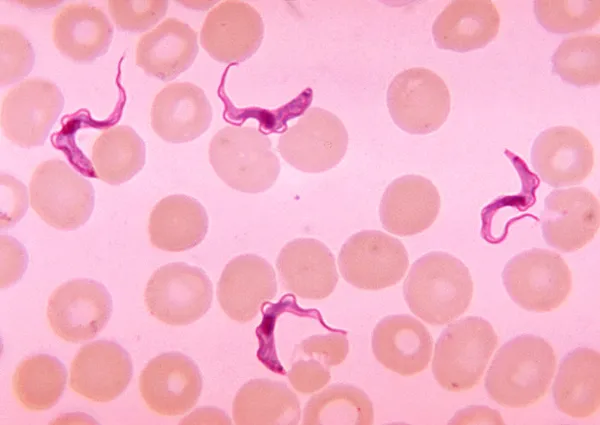
African trypanosomiasis is an insect-borne parasitic infection of humans and other animals caused by the protozoan species Trypanosoma brucei, which is transmitted by the bite of an infected tsetse fly. Human African trypanosomiasis (HAT) is also known as sleeping sickness. Humans are infected by two subspecies of T. brucei: T. brucei gambiense is primarily transmitted between humans and causes over 92% of cases, while T. brucei rhodesiense is zoonotic, with animals such as cattle serving as reservoirs. During the first stage of the disease, T. brucei parasites replicate in the blood and lymph, causing fever, headache, itchiness, and joint pains about one to three weeks after the bite. Weeks to months later, the parasite crosses the blood–brain barrier and the second stage begins with neurological symptoms including confusion, poor coordination, numbness, and trouble sleeping. Without treatment, African trypanosomiasis almost always results in death. Diagnosis involves detecting the parasite in a blood smear or lymph node fluid. A lumbar puncture is often needed to tell the difference between first- and second-stage disease. T. brucei gambiense causes chronic infection that can take months to years to develop symptoms, while T. brucei rhodesiense infection causes symptoms within weeks to months. Prevention involves avoiding tsetse fly bites, for example by the use of insect repellents and protective clothing. Vector control measures, such as spraying insecticides and releasing sterilized tsetse flies in endemic areas, have significantly reduced the incidence of disease. Screening the at-risk population with blood tests for T. brucei gambiense can prevent the development of severe disease. Treatment is easier when the disease is detected early and before neurological symptoms begin. The use of pentamidine or suramin treats the first stage of T. brucei infection, but if the disease progresses to the neurological stage, dosages of eflornithine or a combination of nifurtimox and eflornithine are the preferred treatment. Fexinidazole is a more recent treatment that can be taken by mouth for either stage of T. brucei gambiense. While melarsoprol works for both types of sleeping sickness, it is typically used only for T. brucei rhodesiense, due to its serious side effects.
Also on this shelf
Joseph Škoda.
Drug overdose.
See also
Uncatalogued shelfText from Wikipedia; plate via Wikimedia Commons. Text CC BY-SA 4.0; plate freely licensed (see Commons). Source record. Images and catalogue data are reproduced from open-access collections.