Science and Medicine
Favelas in the city of São Paulo
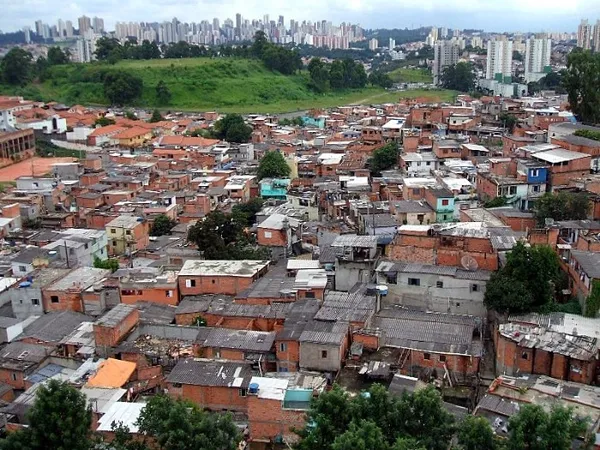
The emergence of favelas in the city of São Paulo began in the 1940s and accelerated substantially in the following decades, mainly due to the huge flow of migrants from other regions of Brazil in search of work and better living conditions. Currently, the city of São Paulo has the largest number of favelas in Brazil. In 2007, according to a study conducted jointly by the city of São Paulo and the international organization Cities Alliance, financed by the World Bank, the capital of São Paulo had 1,538 favelas, occupying an area of 30 square kilometers. According to the same study, the number of families living in the city's favelas was 400,000, bringing together an estimated total of between 1.6 and 2 million people, or approximately 16% of the city's population. According to data from 2000, adding the favela population to the residents of tenements and other irregular residences, more than half of São Paulo's residents live in housing classified as "substandard housing" ("submoradias"). However, according to official data from the 2010 Census, collected by the Brazilian Institute of Geography and Statistics (IBGE), approximately 11% of the population of the city of São Paulo. In its metropolitan region, 2,162,368 people live in "subnormal settlements" ("assentamentos subnormais"), the government's definition for classifying favelas, which corresponds to 11% of the metropolis' population.
Also on this shelf
Armand Trousseau.
Copley Medal.
See also
Uncatalogued shelfText from Wikipedia; plate via Wikimedia Commons. Text CC BY-SA 4.0; plate freely licensed (see Commons). Source record. Images and catalogue data are reproduced from open-access collections.