Science and Medicine
Dolphin
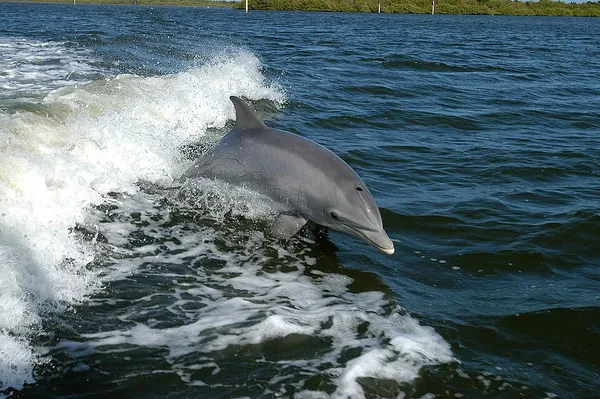
A dolphin is any one of the 40 extant species of aquatic mammal from the cetacean families Delphinidae (the oceanic dolphins), Platanistidae (the Indian river dolphins), Iniidae (the New World river dolphins), Pontoporiidae (the brackish dolphins), and the probably extinct Lipotidae (baiji or Chinese river dolphin). All these families belong to the parvorder Odontoceti, i.e., toothed whales, which also include the closely related families Monodontidae (beluga and narwhal) and Phocoenidae (porpoises), as well as the more distant families Physeteroidea (sperm whales) and Ziphiidae (beaked whales). Dolphins range in sizes from the human-sized 1.7-metre-long (5 ft 7 in) and 50-kilogram (110-pound) Maui's dolphin; to the 9.5 m (31 ft) and 10-tonne (11-short-ton) apex predator, the orca. Various species of dolphins exhibit sexual dimorphism where the males are larger than females. They have streamlined, fish-like bodies with the two forelimbs evolving into flippers, complete loss of hindlimbs (with only vestigial pelvic skeleton), and the tail forming a horizontal fluke. Though not quite as flexible as the semiaquatic seals, they are faster and more agile in water; some dolphins can briefly travel at speeds of 29 kilometres per hour (18 mph) or leap about 9 metres (30 ft). Dolphins use their conical teeth to capture fast-moving prey such as forage fish, coleoids and shrimps. They have well-developed hearing which is adapted for both air and water; so well developed that some can survive even if they are blind. Some species are well adapted for diving to great depths. Like other aquatic mammals, they have a thick layer of subcutaneous adipose tissue, i.e., blubber, to keep the body warm in the cold water. Dolphins are widespread, mostly in pelagic marine environments but some thrive in brackish and freshwater bodies. Most species prefer the warm waters of the tropic zones, but some, such as the right whale dolphin, prefer colder climates. Like most nektonic animals, dolphins are carnivorous, feed largely on fish and squid, but a few large-bodied dolphins, such as the orca, prey upon larger marine animals such as seals, other dolphins and porpoises, large bluewater fish such as sharks, billfish and bluefin tuna, and sometimes even seabirds. Male dolphins typically mate with multiple females every year, but females only mate every two to three years.
Also on this shelf
COVID-19 pandemic in Beijing.
2015–16 Zika virus epidemic.
See also
Uncatalogued shelfText from Wikipedia; plate via Wikimedia Commons. Text CC BY-SA 4.0; plate freely licensed (see Commons). Source record. Images and catalogue data are reproduced from open-access collections.