Science and Medicine
Bordetella pertussis
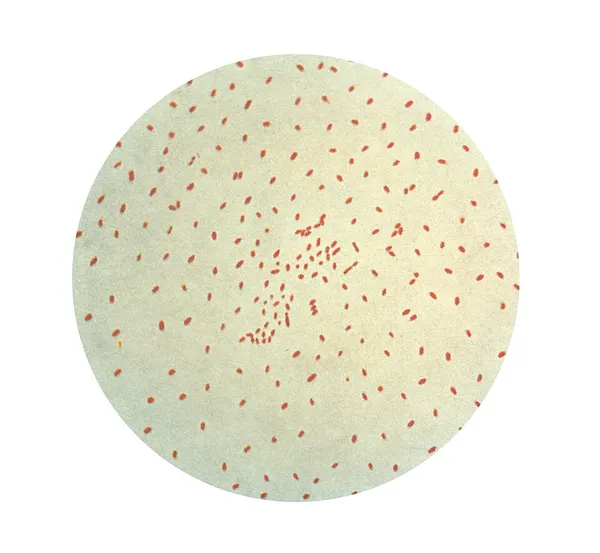
Bordetella pertussis is a Gram-negative, aerobic, pathogenic, encapsulated coccobacillus bacterium of the genus Bordetella. It is the causative agent of pertussis or whooping cough. Despite widespread vaccination, B. pertussis continues to cause illness and death worldwide due to declining immunity and pathogen adaptation. Its virulence factors include pertussis toxin, adenylate cyclase toxin, filamentous haemagglutinin, pertactin, pili, and tracheal cytotoxin. B. pertussis is an obligate human pathogen and is transmitted through airborne droplets. The disease's incubation period averages 7–10 days, however the range is anywhere from 6–20 days. The bacterium attaches to the ciliated epithelial cells lining the respiratory tract using specialized surface proteins to remain in place. It then releases toxins that disrupt normal cellular functions and cause symptoms in its human host, the only known reservoir for B. pertussis. The complete B. pertussis genome of 4,086,186 base pairs was published in 2003. This is smaller than the closely-related species B. bronchiseptica, with a genome of 5.2 million base pairs. On the other hand, similarly to B. bronchiseptica, B. pertussis can express a flagellum-like structure, although it is normally classified as nonmotile bacterium.
Also on this shelf
Angelo Maffucci.
Copley Medal.
See also
Uncatalogued shelfText from Wikipedia; plate via Wikimedia Commons. Text CC BY-SA 4.0; plate freely licensed (see Commons). Source record. Images and catalogue data are reproduced from open-access collections.