Science and Medicine
1889–1890 pandemic
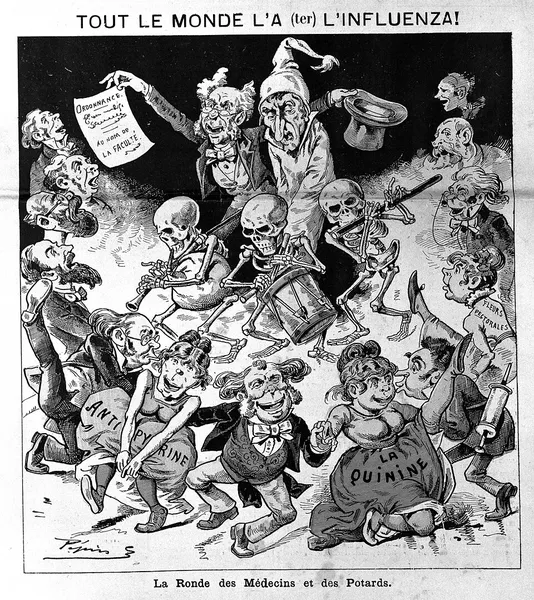
The 1889–1890 pandemic, often referred to as the "Asiatic flu" or "Russian flu", was a worldwide respiratory viral pandemic. It was the last great pandemic of the 19th century, and is among the deadliest pandemics in history. The pandemic killed about 1 million people out of a world population of about 1.5 billion (0.067% of population). The most reported effects of the pandemic took place from October 1889 to December 1890, with recurrences in March to June 1891, November 1891 to June 1892, the northern winter of 1893–1894, and early 1895. According to researchers' estimates, excess mortality from Russian influenza in the Russian Empire for the period 1889–1890 could be from 60,000 to 90,000 people, with lethality from the virus, a little more than 0.2%. Although contemporaries described the pandemic as influenza and 20th-century scholars identified several influenza strains as the possible pathogen, several authors from the early 2020s suggest that it may have been caused by human coronavirus OC43.
Also on this shelf
Cadaver.
Dermatologic surgical procedure.
See also
- ▸Autonomous detection system
- ▸Architecture of Lagos
- ▸Gamaleya Research Institute of Epidemiology and Microbiology
Text from Wikipedia; plate via Wikimedia Commons. Text CC BY-SA 4.0; plate freely licensed (see Commons). Source record. Images and catalogue data are reproduced from open-access collections.