Science and Medicine
Generation Z in the United States
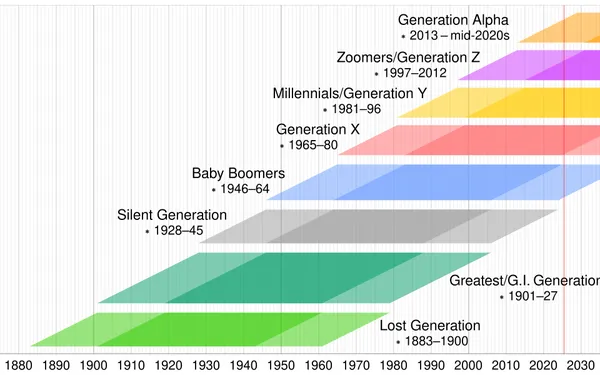
Generation Z (or Gen Z for short), colloquially known as Zoomers, is the demographic cohort succeeding Millennials and preceding Generation Alpha. Members of Generation Z, were born between the mid-to-late 1990s and the early 2010s, with the generation typically being defined as those born from 1997 to 2012. In other words, the first wave came of age during the latter half of the second decade of the twenty-first century, a time of significant demographic change due to declining birthrates, population aging, and immigration. Americans who grew up in the 2000s and 2010s saw gains in IQ points, but loss in creativity. They also reach puberty earlier than previous generations. On the whole, they are financially cautious, and are increasingly interested in alternatives to attending institutions of higher education, with young men being primarily responsible for the trend. They became familiar with the Internet and portable digital devices at a young age (as "digital natives"), but are not necessarily digitally literate, and tend to struggle in a digital work place. The majority use at least one social-media platform, leading to concerns that spending so much time on social media can distort their view of the world, hamper their social development, harm their mental health, expose them to inappropriate materials, and cause them to become addicted. Although they trust traditional news media more than what they see online, they tend to be more skeptical of the news than their parents. While a majority of young Americans of the late 2010s held politically left-leaning views, Generation Z has been shifting towards the right since 2020. Most members of Generation Z are more interested in advancing their careers than pursuing idealistic political causes. There is a significant sex gap, with implications for families, politics, and society at large. As voters, members Generation Z do not align themselves closely with either major political parties; their top issue is the economy. As consumers, Generation Z's actual purchases do not reflect their environmental ideals.
Also on this shelf
Eric Feigl-Ding.
Brajesh K. Lal.
See also
Uncatalogued shelfText from Wikipedia; plate via Wikimedia Commons. Text CC BY-SA 4.0; plate freely licensed (see Commons). Source record. Images and catalogue data are reproduced from open-access collections.