Science and Medicine
Chinese government response to COVID-19
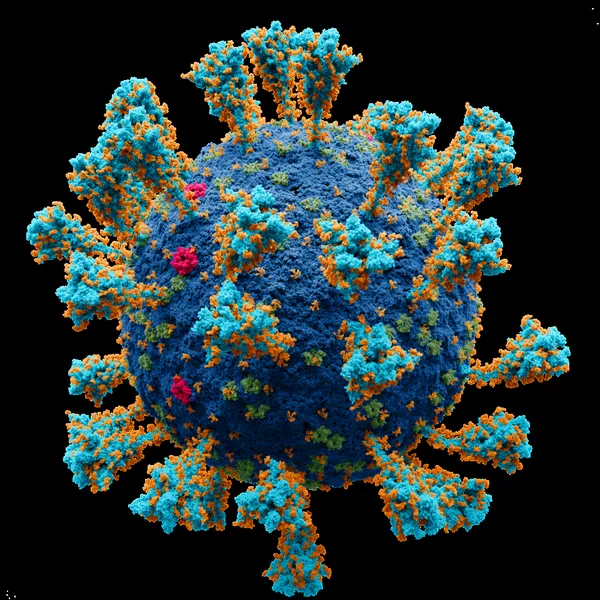
During the COVID-19 pandemic in mainland China, the Chinese Communist Party (CCP) and government of China under CCP general secretary Xi Jinping's administration pursued a zero-COVID strategy to prevent the domestic spread of COVID-19 until late 2022. Aspects of the response have been controversial, with the zero-COVID approach being praised and the government's lack of transparency, censorship, and spread of misinformation being criticized. The government abandoned its zero-COVID policy on 7 December 2022. After discovery of a cluster of patients with pneumonia of unknown etiology in Wuhan, Hubei Province, a public notice on the outbreak was distributed on 31 December 2019. Three days earlier on 28 December 2019, Chinese researchers in Beijing uploaded a fully mapped sequence of COVID-19's structure to the NIH GenBank, but the report was never publicly accessible due to it missing technical, non-scientific information required for submission despite NIH attempts to communicate with the report author. On 8 January 2020, a new coronavirus (SARS-CoV-2) was announced by Chinese scientists as the cause of the new disease; and on 10 January a nearly identical virus to the 28 December upload was sequenced and its genome made available online. On 17 January 2024, The Wall Street Journal released a report about the former 28 December upload that officially contradicted the Chinese government's claim that knowledge of the cause of the outbreak in the early weeks of January 2020 was unknown, and that information was shared as soon as it was available. On 23 January 2020, the Chinese government banned travel to and from Wuhan, enforced strict quarantines in affected regions and initiated a national response. The epidemic in Hubei province peaked on 4 February 2020. Large temporary hospitals were built in Wuhan to isolate patients with mild-to-moderate symptoms, with the first opening on 5 February 2020. The epidemic was heavily concentrated within Hubei province and Wuhan. Through 22 March 2020, over 80% of the recorded cases in China were in Hubei province, with over 60% of cases nationwide occurring in Wuhan alone. By the summer of 2020, China had largely brought the outbreak under control, ending widespread community transmission. After the initial outbreak, lockdowns and other restrictive measures were eased throughout China.
Also on this shelf
George Emil Palade.
History of writing.
See also
Uncatalogued shelfText from Wikipedia; plate via Wikimedia Commons. Text CC BY-SA 4.0; plate freely licensed (see Commons). Source record. Images and catalogue data are reproduced from open-access collections.