Science and Medicine
1963 Wrocław smallpox epidemic
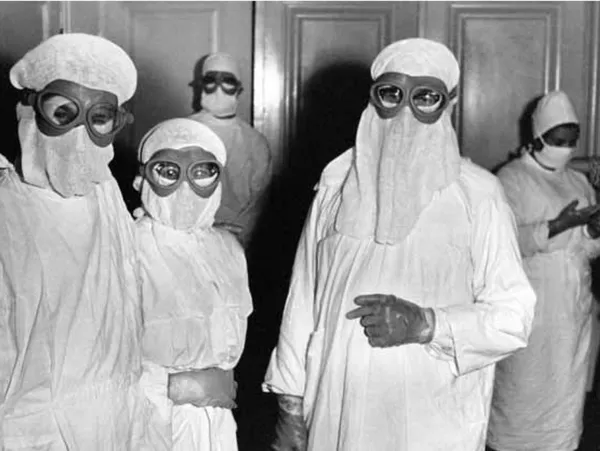
The smallpox epidemic in Wrocław was the last outbreak of smallpox in Poland and one of the last in Europe (the 1972 Yugoslav smallpox outbreak was last) and the biggest disease outbreak in Europe until the COVID-19 pandemic. It broke out in the summer of 1963. The disease was brought to Poland in May by Bonifacy Jedynak, an officer of the Security Service (Służba Bezpieczeństwa), returning from India (according to other sources, from Burma or Vietnam). The first fatal victim was a nurse, the daughter of a hospital cleaner, who had been in contact with the infected individual. The state of epidemic was declared on July 17 and lifted on September 19. A total of 99 people contracted the disease (most of them healthcare workers), of whom seven died, including four doctors and nurses. The youngest patient was five months old, the oldest was 83. The city was paralyzed and isolated from the rest of the country by a sanitary cordon for several weeks. Although the disease spread beyond Wrocław, it was treated in five voivodeships. A large-scale prevention program was implemented: individuals suspected of contact with patients were placed in isolation facilities, located, among others, on Stabłowicka Street (Pracze Odrzańskie) and Kiełczowska Street (Psie Pole). In the village of Szczodre, a hospital for smallpox patients was organized.
Also on this shelf
Department of Pharmacology, University of Oxford.
Drug overdose.
See also
Uncatalogued shelfText from Wikipedia; plate via Wikimedia Commons. Text CC BY-SA 4.0; plate freely licensed (see Commons). Source record. Images and catalogue data are reproduced from open-access collections.