Science and Medicine
Gottfried Wilhelm Leibniz
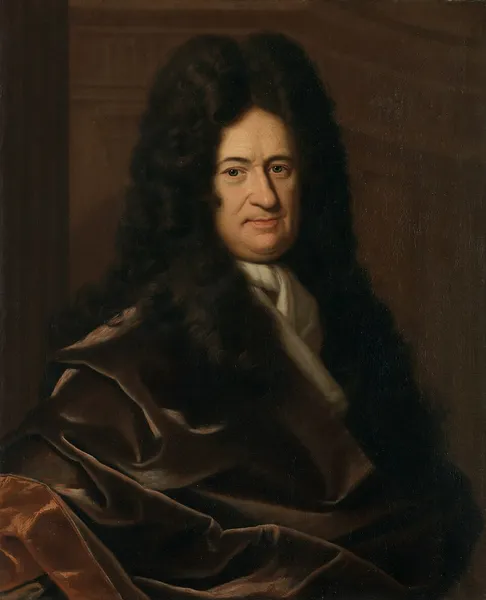
Gottfried Wilhelm Leibniz (or Leibnitz; 1 July 1646 [O.S. 21 June] – 14 November 1716) was a German polymath active as a mathematician, philosopher, scientist, and diplomat. Alongside Isaac Newton, he is widely credited with the invention of calculus. He is also credited with making foundational contributions to other areas of mathematics, such as binary arithmetic and statistics. Leibniz has been called the "last universal genius" due to his vast expertise across fields, which became a rarity after his lifetime with the coming of the Industrial Revolution and the spread of specialized labour. He is a prominent figure in both the history of philosophy and the history of mathematics. He wrote works on philosophy, theology, ethics, politics, law, history, philology, games, music, economics and other studies. Leibniz also made major contributions to physics and technology, and anticipated notions that surfaced much later in probability theory, biology, medicine, geology, psychology, linguistics and computer science. Leibniz contributed to the field of library science, developing a cataloguing system (at the Herzog August Library in Wolfenbüttel, Germany) that came to serve as a model for many of Europe's largest libraries. His contributions to a wide range of subjects were scattered in various learned journals, in tens of thousands of letters and in unpublished manuscripts. He wrote in several languages, primarily in Latin, French and German. As a philosopher, he was a leading representative of 17th-century rationalism and idealism. As a mathematician, his major achievement was the development of differential and integral calculus, independently of Newton's developments. Although Newton first developed his theory earlier in 1666, and which had been in circulation among mathematicians since 1668, Leibniz's notation has been favoured as the conventional and more exact expression of calculus. In addition to his work on calculus, he is credited with devising the modern binary number system which is the basis of modern communications and digital computing (though the English astronomer Thomas Harriot had devised the same system decades before).
Also on this shelf
Dominick P. Purpura.
Healthcare in Ghana.
See also
Uncatalogued shelfText from Wikipedia; plate via Wikimedia Commons. Text CC BY-SA 4.0; plate freely licensed (see Commons). Source record. Images and catalogue data are reproduced from open-access collections.