Science and Medicine
Ex vivo
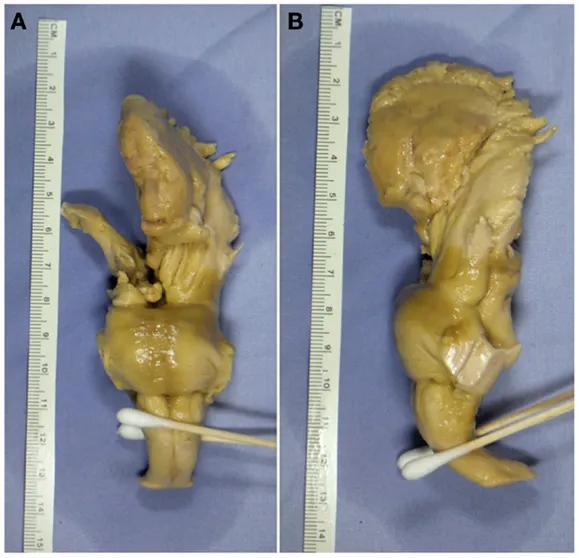
Ex vivo (Latin for 'out of the living') is a term for biological studies involving tissues, organs, or cells maintained outside their native organism under controlled laboratory conditions. By carefully managing factors such as temperature, oxygenation, humidity, and nutrient delivery, as well as by perfusing a nutrient solution through the vasculature, researchers sustain the extracted materials' viability, structural integrity, and physiological function temporarily to conduct experiments that would be difficult or unethical in a living body. Ex vivo models are a middle ground between in vitro (lit. 'in the glass') models, which typically use isolated cells, and in vivo (lit. 'in the living') studies conducted inside living organisms. Ex vivo models are used for pharmacological screening, toxicology testing, organ transplant evaluation, developmental biology, as well as studies of disease mechanisms across fields ranging from cardiology to neuroscience, dermatology, and orthopedics. Since the models often use human tissues obtained from clinical procedures or biobanks, they can reduce reliance on live-animal experimentation; their utility, however, is limited by finite viability, incomplete systemic integration, and post-mortem ('after-death') biochemical changes that accumulate over time. The earliest perfusion studies were conducted in the mid-19th century, and subsequent advances in sterilization, imaging, and microfluidics enabled wider adoption into the 20th and 21st centuries. Regulatory oversight depends on specimen origin: human ex vivo research is subject to informed consent, whereas animal-derived specimens fall under animal care guidelines.
Also on this shelf
Brain–computer interface.
John Andrew Crump.
See also
Uncatalogued shelfText from Wikipedia; plate via Wikimedia Commons. Text CC BY-SA 4.0; plate freely licensed (see Commons). Source record. Images and catalogue data are reproduced from open-access collections.