Science and Medicine
HIV/AIDS in Pakistan
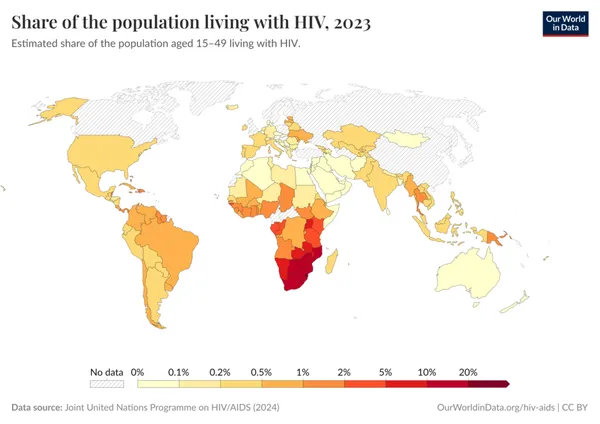
HIV is recognized as a health concern in Pakistan with the number of cases growing. Moderately high drug use and lack of acceptance that non-marital sex is common in the society have allowed the HIV epidemic to take hold in Pakistan, mainly among injecting drug users (IDU), male, female and transvestite sex workers (MSW, FSW and TSW) as well as the repatriated migrant workers. HIV infection can lead to AIDS that may become a major health issue. By the mid-2000s, the number of HIV cases had increased to approximately 0,102 million. This number was estimated little over 4,000, as the HIV cases reported since 1986. The UN and government estimated the number of HIV/AIDS cases around 97,000 ranging from a lowest estimate of 46,000 to a highest estimate of 210,000. More realistic estimates that are based on actual surveillance figures suggest that this number may be closer to 40,000–45,000. The 2008 prevalence of HIV infection in adults aged 15 to 49 was 0.1%. (0.05% if one accepts the lower estimates). Officials say that the majority of cases go unreported due to social taboos about sex and victims' fears of discrimination. The other reason for all the cases not being reported is that HIV is a disease either not systematically tested for or reported in the routine surveillance system.
Also on this shelf
Botulinum toxin.
Alphonse Dochez.
See also
Uncatalogued shelfText from Wikipedia; plate via Wikimedia Commons. Text CC BY-SA 4.0; plate freely licensed (see Commons). Source record. Images and catalogue data are reproduced from open-access collections.