Science and Medicine
Electric eel
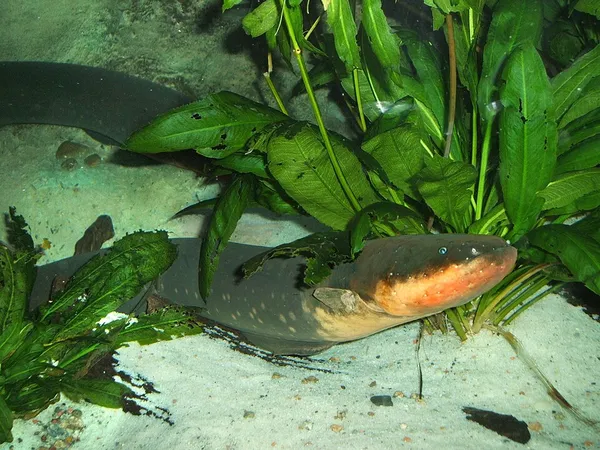
The electric eels are a genus, Electrophorus, of neotropical freshwater fish from South America in the family Gymnotidae, of which they are the only members of the subfamily Electrophorinae. They are known for their ability to stun their prey by generating electricity, delivering shocks at up to 860 volts. Their electrical capabilities were first studied in 1775, contributing to the invention of the electric battery in 1800. Despite their name, electric eels are not closely related to the true eels (Anguilliformes) but are members of the electroreceptive knifefish order Gymnotiformes. In 2019, electric eels were split into three species: for more than two centuries before that, the genus was believed to be monotypic, containing only Electrophorus electricus. They are nocturnal, obligate air-breathing animals, with poor vision complemented by electrolocation; they mainly eat fish. Electric eels grow for as long as they live, adding more vertebrae to their spinal column. Males are larger than females. Some captive specimens have lived for over 20 years.
Also on this shelf
Ewald Weibel.
Andrew Wakefield.
See also
Uncatalogued shelfText from Wikipedia; plate via Wikimedia Commons. Text CC BY-SA 4.0; plate freely licensed (see Commons). Source record. Images and catalogue data are reproduced from open-access collections.