Science and Medicine
2026 Ebola epidemic
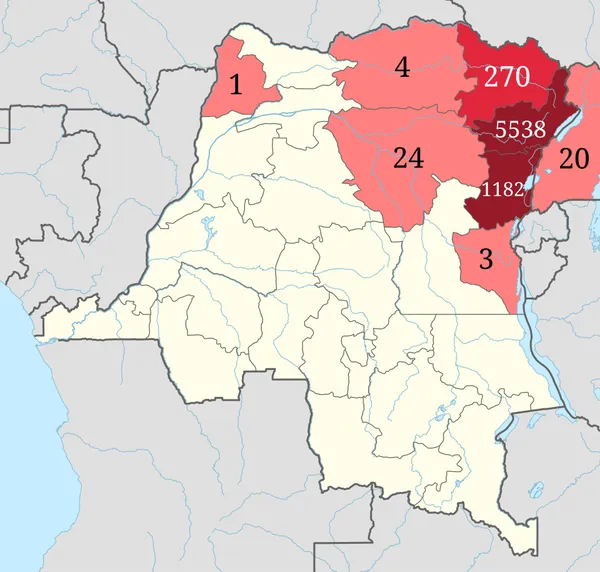
The 2026 Ebola epidemic is an outbreak of the Ebola virus disease (EVD) mainly in the eastern Democratic Republic of the Congo (DRC) and neighbouring countries, including Uganda. Initial cases were reported on 14 May 2026 in the Ituri Province. It is the 17th Ebola outbreak in the DRC and began five months after the end of the previous outbreak. Early infections are theorised to have occurred in January or February 2026 in the town of Mongbwalu. By early August, it had become the fastest growing Ebola outbreak on record, as well as the second largest. It is caused by the Bundibugyo ebolavirus (BDBV) pathogen, which has complicated efforts as existing treatments and vaccines are for the Zaire ebolavirus. The outbreak was declared a public health emergency of international concern (PHEIC) by the World Health Organization (WHO) on 16 May 2026. There have been 4,120 confirmed deaths in the DRC, and another 2 in Uganda, as of the first week of October. Poor health infrastructure and ongoing armed conflicts in the region hinder detection, treatment, and prevention; it is considered likely that the true scale of the outbreak exceeds the confirmed numbers, stressing a preexisting severe humanitarian crisis. This added instability provided a situation ripe for rebel groups to capitalise on. The outbreak has spread beyond Ituri to six more provinces in the DRC, including North Kivu, South Kivu, Haut-Uélé, Tshopo, Bas-Uélé and Sud-Ubangi. Cases were also reported in Uganda's capital, Kampala, and in France following the return of a health worker on a humanitarian mission.
Also on this shelf
Bas-Uélé.
Hormonal intrauterine device.
See also
Uncatalogued shelfText from Wikipedia; plate via Wikimedia Commons. Text CC BY-SA 4.0; plate freely licensed (see Commons). Source record. Images and catalogue data are reproduced from open-access collections.