Science and Medicine
Colonoscopy
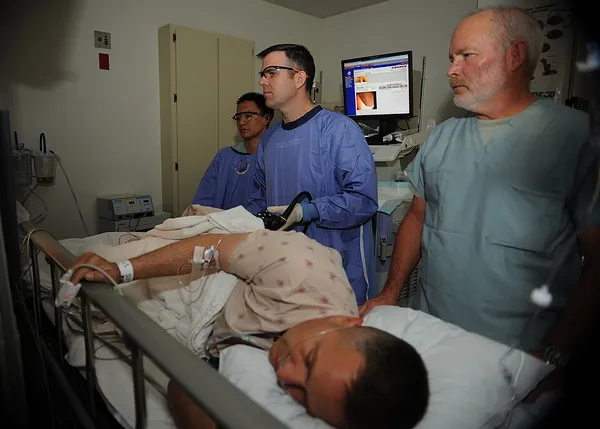
Colonoscopy () or coloscopy () is a medical procedure involving the endoscopic examination of the large bowel (colon) and the distal portion of the small bowel. This examination is performed using either a CCD camera or a fiber optic camera, which is mounted on a flexible tube and passed through the anus. The purpose of a colonoscopy is to inspect the internal lining of the colon wall, to detect ulceration or precancerous polyps, and to permit biopsy or removal of suspected colorectal cancer lesions. Colonoscopy surveys the entire colon, which runs 120 to 150 cm (4–5 ft). Sigmoidoscopy is similar, but only surveys the sigmoid colon, which comprises 60 cm of the distal (left) side of the colon. The benefits of colonoscopy for cancer survival have primarily been associated with the detection of lesions in the distal portion of the colon. Routine use of colonoscopy screening varies globally. In the US, colonoscopy is a commonly recommended and widely utilized screening method for colorectal cancer, often beginning at age 45 or 50, depending on risk factors and guidelines from organizations like the American Cancer Society. However, in the European Union, several countries primarily employ fecal occult blood testing (FOBT) or sigmoidoscopy for population-based screening. These variations stem from many factors. Recent studies have stressed the need for screening strategies and awareness campaigns to combat colorectal cancer - on a global scale. Research is underway to identify the characteristics of patients that may indicate potential difficulties in performing a colonoscopy in a given individual, both in children and adults.
Also on this shelf
Citizen science.
Girolamo Corner.
See also
Uncatalogued shelfText from Wikipedia; plate via Wikimedia Commons. Text CC BY-SA 4.0; plate freely licensed (see Commons). Source record. Images and catalogue data are reproduced from open-access collections.