Science and Medicine
Anthrax
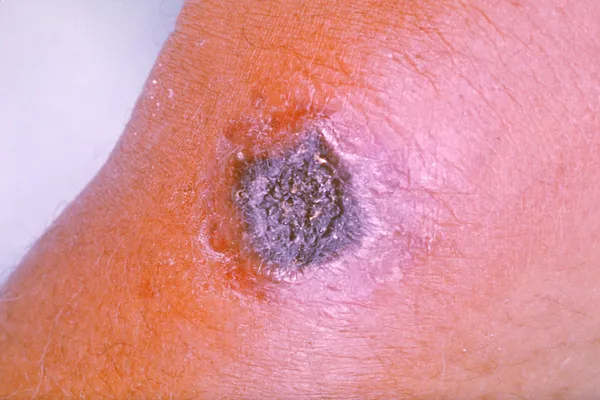
Anthrax is an infection caused by the bacterium Bacillus anthracis or Bacillus cereus biovar anthracis. Infection typically occurs by contact with the skin, inhalation, or intestinal absorption. Symptom onset occurs between one day and two months after the infection is contracted. The skin form presents with a small blister with surrounding swelling that often turns into a painless ulcer with a black center. The inhalation form presents with fever, chest pain, and shortness of breath. The intestinal form presents with diarrhea (which may contain blood), abdominal pains, nausea, and vomiting. According to the U.S. Centers for Disease Control and Prevention, the first clinical descriptions of cutaneous anthrax were given by Maret in 1752 and Fournier in 1769. Before that, anthrax had been described only in historical accounts. The German scientist Robert Koch was the first to identify Bacillus anthracis as the bacterium that causes anthrax. Anthrax is spread by contact with the bacterium's spores, which often appear in infected animal products. Contact includes inhalation, eating, or through an area of broken skin. It does not typically spread directly between people. At risk populations include people who work with animals or animal products and military personnel. Diagnosis can be confirmed by finding antibodies or the toxin in the blood or by the culture of a sample from the infected site. The anthrax vaccine is recommended for people at high risk of infection. Immunizing animals against anthrax is recommended in areas where previous infections have occurred. A two-month course of antibiotics such as ciprofloxacin, levofloxacin and doxycycline after exposure can also prevent infection. If infection occurs, treatment is with antibiotics and possibly antitoxin. The type and number of antibiotics used depend on the type of infection. An antitoxin is recommended for those with widespread infection. A rare disease, human anthrax is most common in Africa and central and southern Asia. It occurs more regularly in Southern Europe than elsewhere on the continent and is uncommon in Northern Europe and North America. Globally, at least 2,000 cases occur a year, with about two cases a year in the United States. Skin infections represent more than 95% of cases. Without treatment the risk of death from skin anthrax is 23.7%.
Also on this shelf
Iatrochemistry.
HIV/AIDS in Africa.
See also
Uncatalogued shelfText from Wikipedia; plate via Wikimedia Commons. Text CC BY-SA 4.0; plate freely licensed (see Commons). Source record. Images and catalogue data are reproduced from open-access collections.