Science and Medicine
George Miller Sternberg
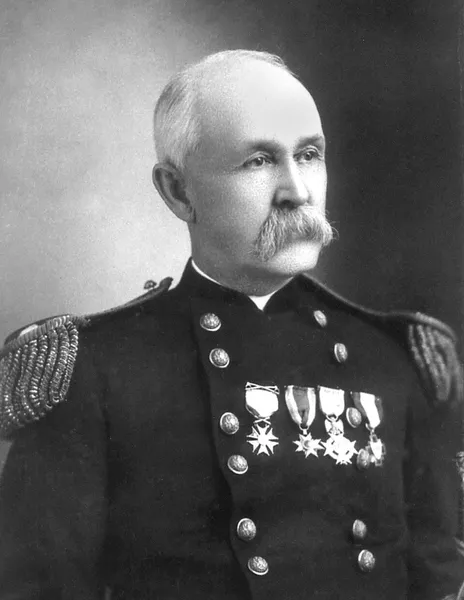
Brigadier General George Miller Sternberg (June 8, 1838 – November 3, 1915) was a U.S. Army physician who is considered the first American bacteriologist, having written Manual of Bacteriology (1892). After he survived typhoid and yellow fever, Sternberg documented the cause of malaria (1881), discovered the cause of lobar pneumonia (1881), and confirmed the roles of the bacilli of tuberculosis and typhoid fever (1886). As the 18th U.S. Army Surgeon General, from 1893 to 1902, Sternberg led commissions to control typhoid and yellow fever, along with his subordinate Major Walter Reed. Sternberg also oversaw the establishment of the Army Medical School (1893; now the Walter Reed Army Institute of Research) and of the U.S. Army Nurse Corps (1901). The pioneering German bacteriologist Robert Koch honored Sternberg with the sobriquet, "Father of American Bacteriology".
Also on this shelf
COVID-19 pandemic in Canada.
Grimace scale.
See also
Uncatalogued shelfText from Wikipedia; plate via Wikimedia Commons. Text CC BY-SA 4.0; plate freely licensed (see Commons). Source record. Images and catalogue data are reproduced from open-access collections.