Science and Medicine
Hepatitis B vaccine
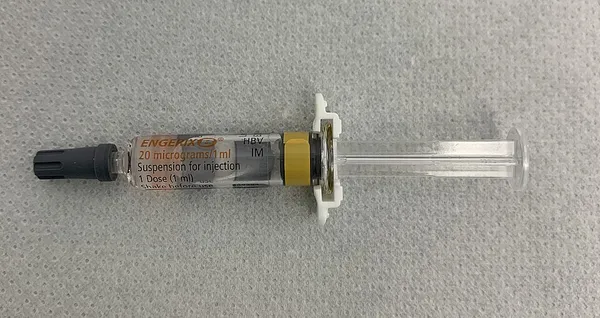
Hepatitis B vaccine is a vaccine that prevents hepatitis B. The first dose is recommended within 24 hours of birth with either two or three more doses given after that. The vaccine is also recommended to premature infants and people with poor immune function such as from HIV/AIDS. It is also recommended that health-care workers be vaccinated. In healthy people, routine immunization results in more than 95% of people being protected. Blood testing to verify that the vaccine has worked is recommended in those at high risk. Additional doses may be needed in people with poor immune function but are not necessary for most people. In those who have been exposed to the hepatitis B virus but not immunized, hepatitis B immune globulin should be given in addition to the vaccine. The vaccine is given by injection into a muscle. Serious side effects from the hepatitis B vaccine are very uncommon. Pain may occur at the site of injection. It is safe for use during pregnancy or while breastfeeding. It has not been linked to Guillain–Barré syndrome. Hepatitis B vaccines are produced with recombinant DNA techniques and contain immunologic adjuvant. They are available both by themselves and in combination with other vaccines. The first hepatitis B vaccine (Merck's Heptavax-B) was approved in the United States in 1981. A recombinant version (Merck's Recombivax-HB) came to market in 1986. It is on the World Health Organization's List of Essential Medicines. Both versions were developed by Maurice Hilleman and his team.
Also on this shelf
COVID-19.
Disease in Imperial Rome.
See also
Uncatalogued shelfText from Wikipedia; plate via Wikimedia Commons. Text CC BY-SA 4.0; plate freely licensed (see Commons). Source record. Images and catalogue data are reproduced from open-access collections.