Science and Medicine
Abortion in the United States
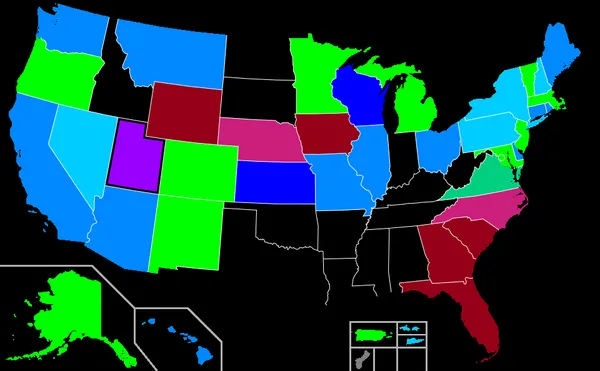
In the United States, abortion is a divisive issue in politics and culture wars. Prior to the mid-19th century, English common law formed the basis of abortion law in the colonies and the early Republic. Connecticut was the first state to regulate abortion in 1821; it outlawed abortion after quickening, the moment in pregnancy when the pregnant woman starts to feel the fetus's movement in the uterus, and forbade the use of poisons to induce one post-quickening. Many states subsequently passed various laws on abortion until the Supreme Court of the United States decisions of Roe v. Wade and Doe v. Bolton decriminalized abortion nationwide in 1973. The Roe decision imposed a federally mandated uniform framework for state legislation on the subject. It also established a minimal period during which abortion is legal, with more or fewer restrictions throughout the pregnancy. That basic framework, modified in Planned Parenthood v. Casey (1992), remained nominally in place, although the effective availability of abortion varied significantly from state to state, as many counties had no abortion providers. Planned Parenthood v. Casey held that a law could not place legal restrictions imposing an "undue burden" for "the purpose or effect of placing a substantial obstacle in the path of a woman seeking an abortion of a nonviable fetus." In December 2021, the FDA legalized telemedicine provision of medication abortion pills with delivery by mail, but many states have laws which restrict this option. In 2022, Roe and Casey were overturned in Dobbs v. Jackson Women's Health Organization, ending federal protection of abortion rights and allowing individual states to regulate any aspect of abortion not preempted by federal law. Since 1976, the Republican Party has generally sought to restrict abortion access based on the stage of pregnancy or to criminalize abortion, whereas the Democratic Party has generally defended access to abortion and has made contraception easier to obtain. The abortion-rights movement advocates for patient choice and bodily autonomy, while the anti-abortion movement advocate that the fetus has a right to live. Historically framed as a debate between the pro-choice and pro-life labels, most Americans agree with some positions of each side. Support for abortion gradually increased in the U.S.
Also on this shelf
Bradford smallpox outbreak of 1962.
Antarctica.
See also
Uncatalogued shelfText from Wikipedia; plate via Wikimedia Commons. Text CC BY-SA 4.0; plate freely licensed (see Commons). Source record. Images and catalogue data are reproduced from open-access collections.