Science and Medicine
Chickenpox
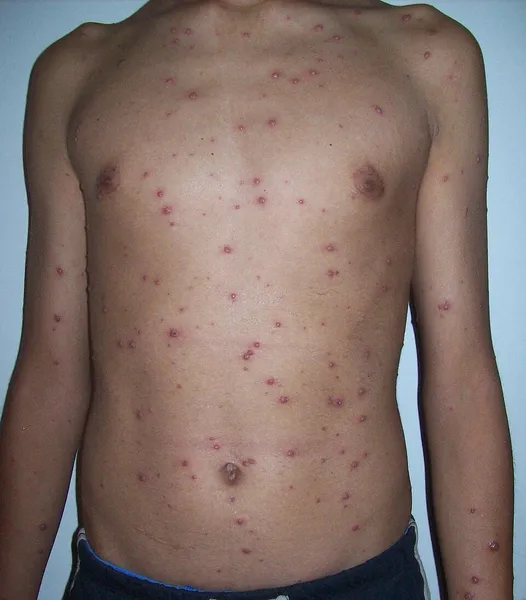
Chickenpox, also known as varicella ( VARR-iss-EL-ə), is a highly contagious, vaccine-preventable disease caused by varicella zoster virus (VZV), a member of the herpesvirus family. The disease results in a characteristic skin rash that forms small, itchy blisters, which eventually scab over. It usually starts on the chest, back, and face. It then spreads to the rest of the body. The rash and other symptoms, such as fever, tiredness, and headaches, usually last five to seven days. Complications may occasionally include pneumonia, inflammation of the brain, and bacterial skin infections. The disease is usually more severe in adults than in children. Chickenpox is an airborne disease that easily spreads via human-to-human transmission, typically through the coughs and sneezes of an infected person. The incubation period is 10–21 days, after which the characteristic rash appears. It may be spread from one to two days before the rash appears until all lesions have crusted over. It may also spread through contact with the blisters. Those with shingles may spread chickenpox to those who are not immune through contact with the blisters. The disease can usually be diagnosed based on the presenting symptom; however, in unusual cases it may be confirmed by polymerase chain reaction (PCR) testing of the blister fluid or scabs. Testing for antibodies may be done to determine if a person is immune. People usually only get chickenpox once. Although reinfections by the virus occur, these reinfections usually do not cause any symptoms. Since its introduction in 1995 in the United States, the varicella vaccine has resulted in a decrease in the number of cases and complications from the disease. It protects about 70–90 percent of people from disease with a greater benefit for severe disease. Routine immunization of children is recommended in many countries. Immunization within three days of exposure may improve outcomes in children. Treatment of those infected may include calamine lotion to help with itching, keeping the fingernails short to decrease injury from scratching, and the use of paracetamol (acetaminophen) to help with fevers. For those at increased risk of complications, antiviral medication such as aciclovir is recommended. Chickenpox occurs in all parts of the world. In 2013, there were 140 million cases of chickenpox and shingles worldwide.
Also on this shelf
COVID-19 pandemic in Shanghai.
44th Medical Brigade.
See also
Uncatalogued shelfText from Wikipedia; plate via Wikimedia Commons. Text CC BY-SA 4.0; plate freely licensed (see Commons). Source record. Images and catalogue data are reproduced from open-access collections.