Science and Medicine
Edward Jenner
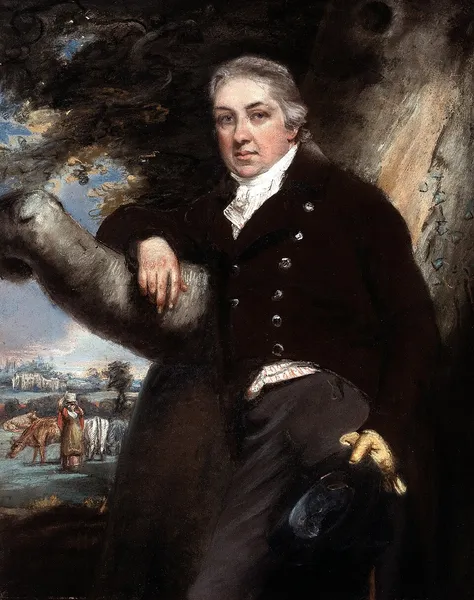
Edward Jenner (17 May 1749 – 26 January 1823) was an English physician and scientist who pioneered the concept of vaccines and created the smallpox vaccine, the world's first vaccine. The terms vaccine and vaccination are derived from Variolae vaccinae ("pustules of the cow"), the term devised by Jenner to denote cowpox. He used it in 1798 in the title of his Inquiry into the Variolae vaccinae known as the Cow Pox, in which Jenner described the protective effect of cowpox against smallpox. Jenner is often called "the father of immunology", and his work is said to have saved "more lives than any other man". In Jenner's time, smallpox killed around 10% of the global population, with the number as high as 20% in towns and cities where infection spread more easily. In 1821, he was appointed physician to King George IV, and was also made mayor of Berkeley and justice of the peace. Jenner was a member of the Royal Society. In the field of zoology, he was among the first modern scholars to describe the brood parasitism of the cuckoo (Aristotle also noted this behaviour in his History of Animals). In 2002, Jenner was named in the BBC's list of the 100 Greatest Britons.
Also on this shelf
Circulatory system.
Forensic anthropology.
See also
Uncatalogued shelfText from Wikipedia; plate via Wikimedia Commons. Text CC BY-SA 4.0; plate freely licensed (see Commons). Source record. Images and catalogue data are reproduced from open-access collections.