Science and Medicine
Atrial fibrillation
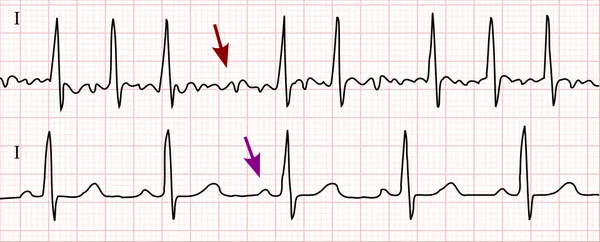
Atrial fibrillation (AF, AFib or A-fib) is an abnormal heart rhythm (arrhythmia) characterized by rapid and irregular beating of the atrial chambers of the heart. It often begins as short periods of abnormal beating, which become longer or continuous over time. It may also start as other forms of arrhythmia, such as atrial flutter, that transform into AF. Episodes can be asymptomatic. Symptomatic episodes may involve heart palpitations, fainting, lightheadedness, loss of consciousness, or shortness of breath. Atrial fibrillation is associated with an increased risk of heart failure, dementia, and stroke. It is a type of supraventricular tachycardia. Atrial fibrillation frequently results from bursts of tachycardia that originate in muscle bundles extending from the atrium to the pulmonary veins. Pulmonary vein isolation by transcatheter ablation can restore sinus rhythm. The ganglionated plexi (autonomic ganglia of the heart atrium and ventricles) can also be a source of atrial fibrillation, and are sometimes also ablated for that reason. Not only the pulmonary vein, but the left atrial appendage and ligament of Marshall can be a source of atrial fibrillation and are also ablated for that reason. As atrial fibrillation becomes more persistent, the junction between the pulmonary veins and the left atrium becomes less of an initiator and the left atrium becomes an independent source of arrhythmias. High blood pressure and valvular heart disease are the most common modifiable risk factors for AF. Other heart-related risk factors include heart failure, coronary artery disease, cardiomyopathy, and congenital heart disease. In low- and middle-income countries, valvular heart disease is often attributable to rheumatic fever. Lung-related risk factors include COPD, obesity, and sleep apnea. Cortisol and other stress biomarkers, as well as emotional stress, may play a role in the pathogenesis of atrial fibrillation. Other risk factors include excess alcohol intake, tobacco smoking, diabetes mellitus, subclinical hypothyroidism, and thyrotoxicosis. However, about half of cases are not associated with any of these aforementioned risks. Healthcare professionals might suspect AF after feeling the pulse and confirm the diagnosis by interpreting an electrocardiogram (ECG).
Also on this shelf
Iknife.
Donald Ewen Cameron.
See also
Uncatalogued shelfText from Wikipedia; plate via Wikimedia Commons. Text CC BY-SA 4.0; plate freely licensed (see Commons). Source record. Images and catalogue data are reproduced from open-access collections.