Science and Medicine
Extinction
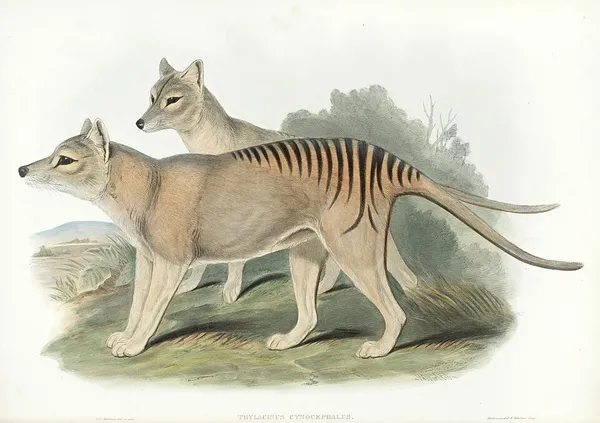
Extinction is the termination of a species via the death of its last member. A taxon may become functionally extinct before the death of its last member if it loses the capacity to reproduce and recover. As a species' potential range may be very large, determining this moment is difficult, and is usually done retrospectively. This difficulty leads to phenomena such as Lazarus taxa, where a species presumed extinct abruptly "reappears" (typically in the fossil record) after a period of apparent absence. Over five billion species are estimated to have died out. It is estimated that there are currently around 8.7 million species of eukaryotes globally, possibly many times more if prokaryotes are included. Notable extinct animal species include non-avian dinosaurs, saber-toothed cats, and mammoths. Through evolution, species arise through the process of speciation. Species become extinct when they are no longer able to survive in changing conditions or against superior competition. The relationship between animals and their ecological niches has been firmly established. A typical species becomes extinct within 10 million years of its first appearance, although some species, called living fossils, survive with little to no morphological change for hundreds of millions of years, though this claim has been disputed. Mass extinctions are relatively rare events; however, isolated extinctions of species and clades are quite common, and are a natural part of the evolutionary process. Only recently have extinctions begun to be recorded, and there is an ongoing mass extinction event caused by human activity. Most species that become extinct are never scientifically documented. Some scientists estimate that up to half of presently existing plant and animal species may become extinct by 2100. A 2018 report indicated that the phylogenetic diversity of 300 mammalian species erased during the human era since the Late Pleistocene would require 5 to 7 million years to recover. According to the 2019 Global Assessment Report on Biodiversity and Ecosystem Services by IPBES, the biomass of wild mammals has fallen by 82%, natural ecosystems have lost about half their area and a million species are at risk of extinction—all largely as a result of human actions. Twenty-five percent of plant and animal species are threatened with extinction.
Also on this shelf
Denis Nash.
Diane Barber.
See also
Uncatalogued shelfText from Wikipedia; plate via Wikimedia Commons. Text CC BY-SA 4.0; plate freely licensed (see Commons). Source record. Images and catalogue data are reproduced from open-access collections.