Science and Medicine
Bundibugyo ebolavirus
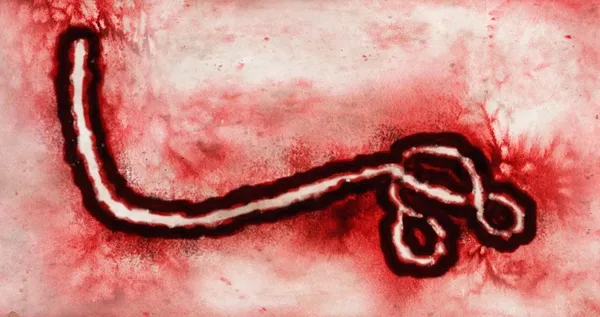
Bundibugyo virus (BDBV) is a species of orthoebolavirus that is closely related to the Zaire ebolavirus (EBOV). The virus is one of several that can cause Ebola disease in humans, taking the form of viral hemorrhagic fever. In the United States it was categorized as a select agent. It is also categorized as a World Health Organization Risk Group 4 Pathogen (requiring Biosafety Level 4-equivalent containment), NIH/NIAID Category A Priority Pathogen, and a Centers for Disease Control and Prevention Category A Bioterrorism Agent, and is listed as a Biological Agent for Export Control by the Australia Group. The virus has caused Ebola outbreaks in 2007, 2012, and in 2026, with the 2026 Ebola epidemic being the fastest-growing Ebola outbreak on record. Its name is derived from Bundibugyo in western Uganda where the virus was first discovered.
Also on this shelf
Chlamydia.
Bobby Darin.
See also
Uncatalogued shelfText from Wikipedia; plate via Wikimedia Commons. Text CC BY-SA 4.0; plate freely licensed (see Commons). Source record. Images and catalogue data are reproduced from open-access collections.